Community
Heritage Open Days
England's largest festival of history and culture, and St Mary's opens its doors for it every September. Free, and no ticket — you simply come in.
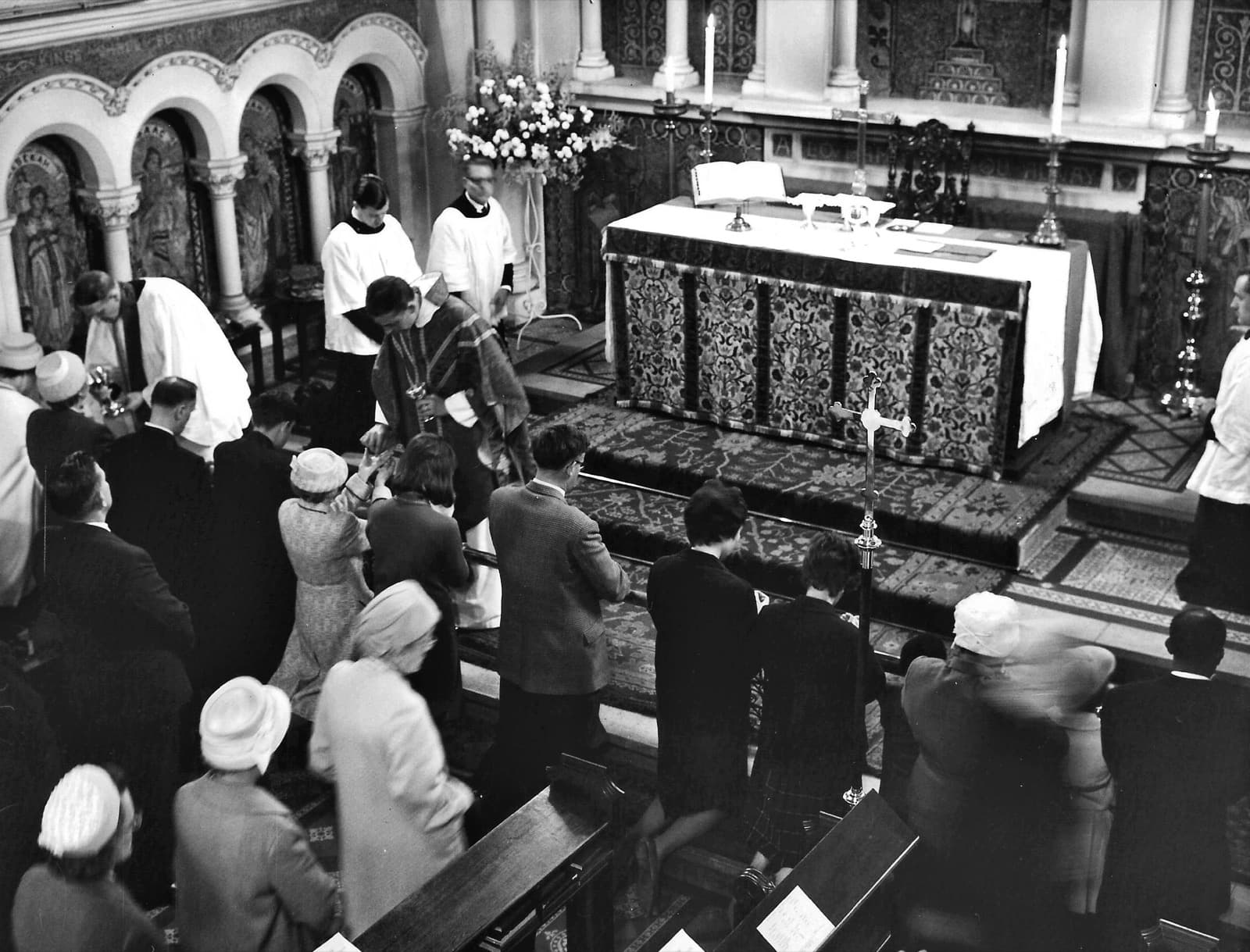
There has been a church on this site for eleven hundred years, and for most of that time it has been an ordinary building where ordinary people came. Heritage Open Days is when we open it up and say so.
When we are open
The next few sessions
- Saturday 12 September10:00 to 16:00
- Sunday 13 September12:00 to 16:00
- Tuesday 15 September12:00 to 16:00
- Wednesday 16 September12:00 to 16:00
- Thursday 17 September10:00 to 16:00
- Friday 18 September12:00 to 16:00
- Saturday 19 September10:00 to 16:00
- Sunday 20 September12:00 to 16:00
Taken from the parish diary. If something looks wrong, tell the parish office.
Come in and look round at your own pace. There is no charge, no ticket and nothing to book — that is the whole idea of the festival.
The national festival runs from 11 to 20 September. We are open on the days listed above and not on the others — the Monday is a day off, so the list is complete rather than missing one.
This year’s theme: Everyday Histories
The 2026 festival asks places to look past the grand and the famous at the ordinary lives, places and moments that make up our shared past — the histories of homes, workplaces, streets and the things people did every week without thinking them remarkable.
Which suits this building, because most of what is written down here is exactly that. The monuments record the wealthy. Almost everything else records somebody at work.
Some everyday histories from this church
Eight men, three hours and twenty-five minutes
On 2 February 1901, the day Queen Victoria was buried, eight Lewisham ringers rang a full peal here with the bells muffled — 5,040 changes, three hours and twenty-five minutes without stopping. The board in the ringing chamber names every one of them and records that it was rung by the local band. They were not famous. They are on the wall because of what they did on a Saturday.
An accusation in the local paper, 1766
When the new ring of eight arrived, the Society of College Youths came to ring on them — and were accused in the press of having taken money for it, which they denied. A row about whether ringers were paid, preserved for two hundred and sixty years.
A churchwarden who did not like the organ
In 1913 the vicar’s warden, A.J. French, recorded that the new organ “suffers like so many organs which are in chancels from its position, the full sound of some of its pipes being somewhat stifled by the chancel arch”. It took another forty years and a rebuild before anybody did anything about it.
A builder’s quote
The tender survives, dated 26 June 1913: Brindley and Foster of Sheffield “hereby agree to carry out in an able and satisfactory manner all the work described in the accompanying specification and estimate for the sum of £150:0:0”. An ordinary contract, of the kind every building in England is full of and almost none of them keep.
A window somebody paid for in 1498
Robert Cheseman left money “to glaze the grete new wyndowe in the belfrye with the Passion of our Lord”. Nineteen years later John Francis left £3 6s 8d to buy a bell. The tower went up over fourteen years on bequests like these — a parish paying for its own building, a will at a time.
A shelf for bread
Over the north door there is a shelf. The loaves of bread were put on it, and each week the churchwardens gave them out to the poor of the parish. The dole is long gone and the shelf was still being pointed out in the 1920s — a piece of joinery that is the only remaining part of a weekly transaction between this building and people who needed feeding.
The board that made a vicar audible
The Georgian church had a three-decker pulpit — clerk’s box at the bottom, reading pew above it, pulpit on top — and over the preacher’s head a sounding board, to throw his voice down into a church with galleries on three sides. The pulpit went long ago. The sounding board was moved to the south porch, and French recorded it there in the 1920s.
The vicar had his own
In the crypt, standing unnoticed in the gloom, there is an antique vicar’s urinal. It is not a curiosity somebody dragged down there and forgot: it is marked on a nineteenth-century plan of the interior of the church, where somebody drew it because it was part of the building. The church had no lavatory at all until the re-ordering of 1995. The vicar, it seems, was differently provided for.
The names nobody kept
And the other side of it. The register of the people enslaved on an estate owned by a family from this parish records, for each of them, a name, an age, an occupation and a country of origin — because compensation was paid to the owners and property had to be counted. Two hundred and eighteen people, described in more detail than most Lewisham labourers of the same decade, and for that reason. There is more on the church and slavery.
While you are here
The tower was begun in 1471 and the rest of the church rebuilt in the 1770s after the old one was taken down. Inside there is a monument by John Flaxman, a ring of eight bells, a clock movement of 1812 still in the tower, and a churchyard that has been in use for eleven hundred years.
Much of what is known about the building was written down by volunteers who catalogued every object in it, one at a time. There is a great deal more on our history and heritage pages.
If you would like to help on the door during the festival — no expertise needed, only a welcome — put your name down here, or email the parish office.