History & Heritage
The tower and the bells
Begun in 1471 and finished in 1512, paid for a few pounds at a time by people who knew they would not see it done.
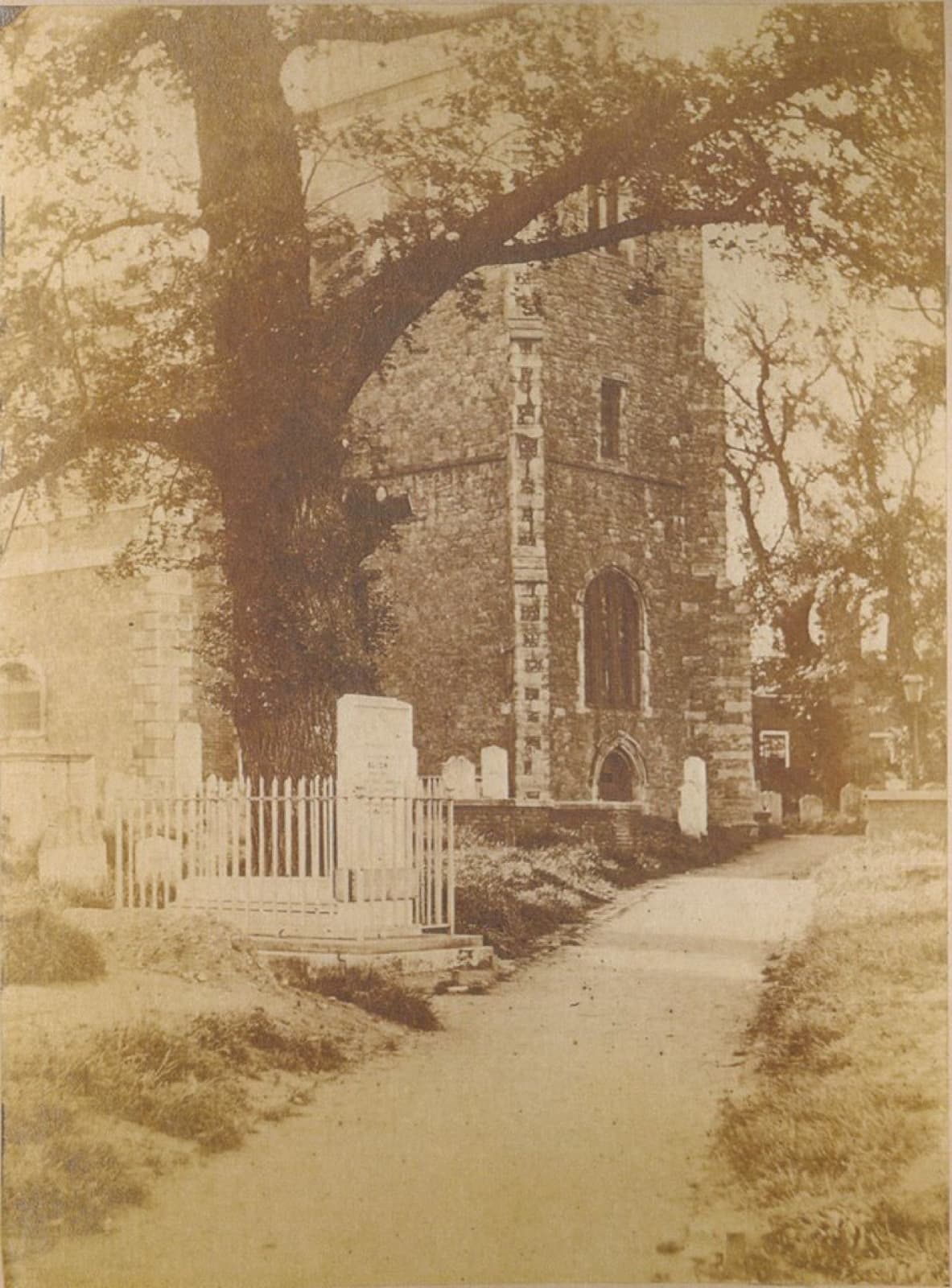
The tower is the oldest thing standing here. Flint and Kentish ragstone, forty-one years in the building, and funded almost entirely by bequests — a house in Greenwich, money for a window, a legacy towards the staircase. Everything else was taken down in 1774; the tower was kept, given an extra storey, and built into the new church.
Who paid for the tower
There was no resident landowner of consequence here in the middle ages, so the parish paid for its own church. Leland Duncan went through the wills and found these. The largest gift is ten marks; the smallest is twelvepence, and one man had no money at all.
- 1471William SpriggHis tenements in East Greenwich, to be sold towards the new building of the bell tower
- 1473Christian Sprigg, widowTen marks to the workmanship of the church steeple
- 1473Cecily Lamkyn of Perry Street6s 8d to the making of the new steeple
- 1473Thomas Edwards3s 4d
- 1473William Scott3s 4d to the steeple works
- 1474John Crokker, husbandman6s 8d a year for three years
- 1475Roger Dene3s to the fabric of the campanile
- 1476John Gossip, smith3s 4d to the new work of the new steeple
- 1476John Gwyn6s 8d
- 1476Walter Newman14s
- 1478Thomas Broke40d to the building of the bell tower
- 1479Bernard Cavill of Chislehurst13s 4d — from outside the parish altogether
- 1483John Newman, husbandman40d
- 1483Symon Bate10s to the building of the new bell tower
- 1483John Almayne12d to the operations of the new steeple
- 1484Roger or Richard CombeNine bushels of corn
- 1486John Broke20d to the reparation of the new steeple
- 1487John Kyngston12d, and half his house and garden after his wife's death
- 1491John Johnsone12d
- 1492Thomas Bedell of Bromley, yeoman5s to the making of the steeple of Lewisham
- 1494William Feyrewyn13s 4d
- 1494Richard WalkerFive marks, alongside the chantry he founded here
- 1498Robert Cheseman13s 4d, and the glazing of the great new window with the Passion of Our Lord
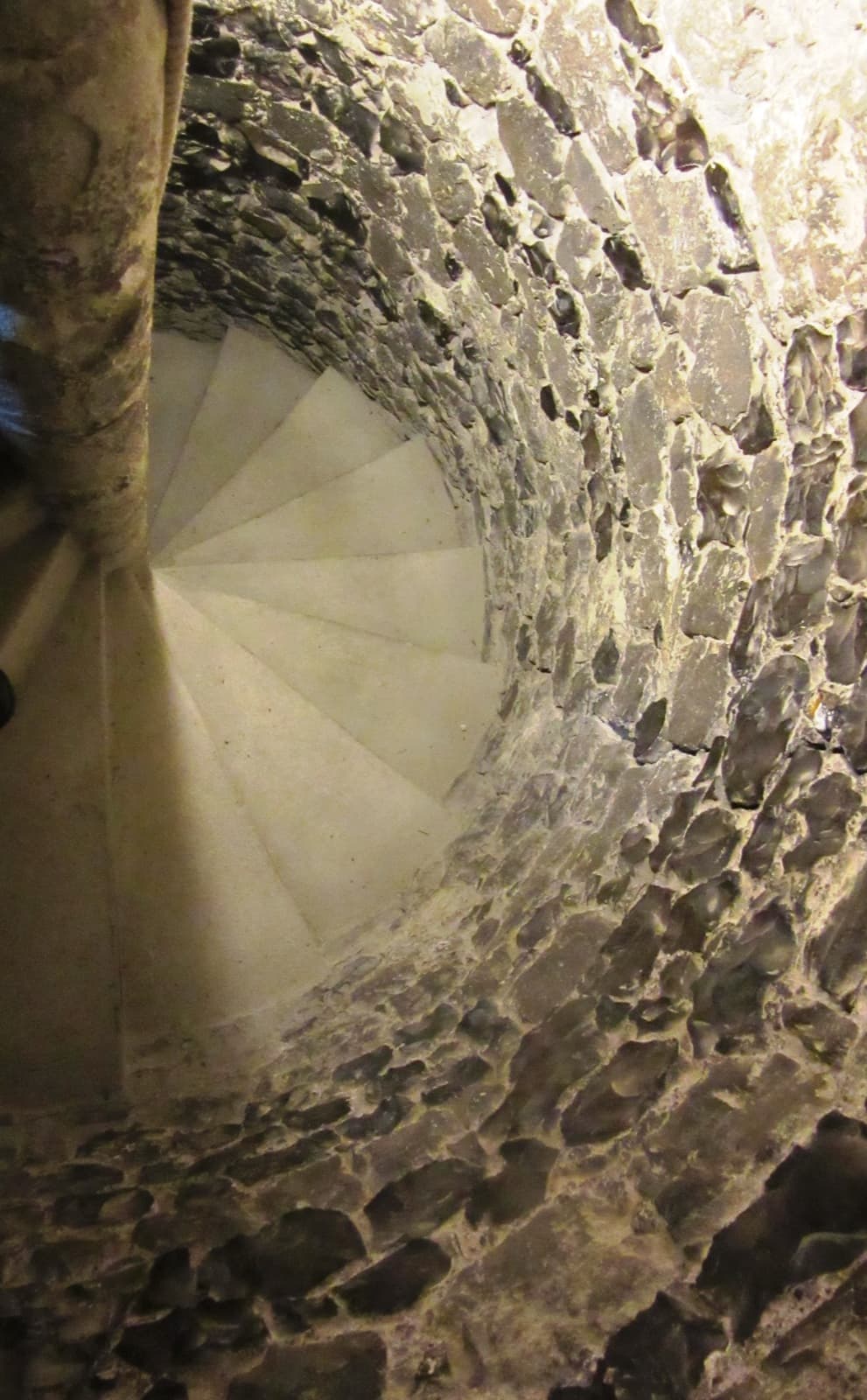
- 1512William Batt26s 8d to making the vice, or spiral stair — the last of them
John Kyngston gave twelvepence and then left half his house and garden, after his wife Alis should die, to the building of the steeple as well.
The ring of eight
Weights are given in hundredweights, quarters and pounds — so “21-1-14” is 21 cwt, 1 quarter, 14 lb, or a little over a tonne. The tenor and the fifth have hung here since 1777, and the sixth was first cast in 1743.
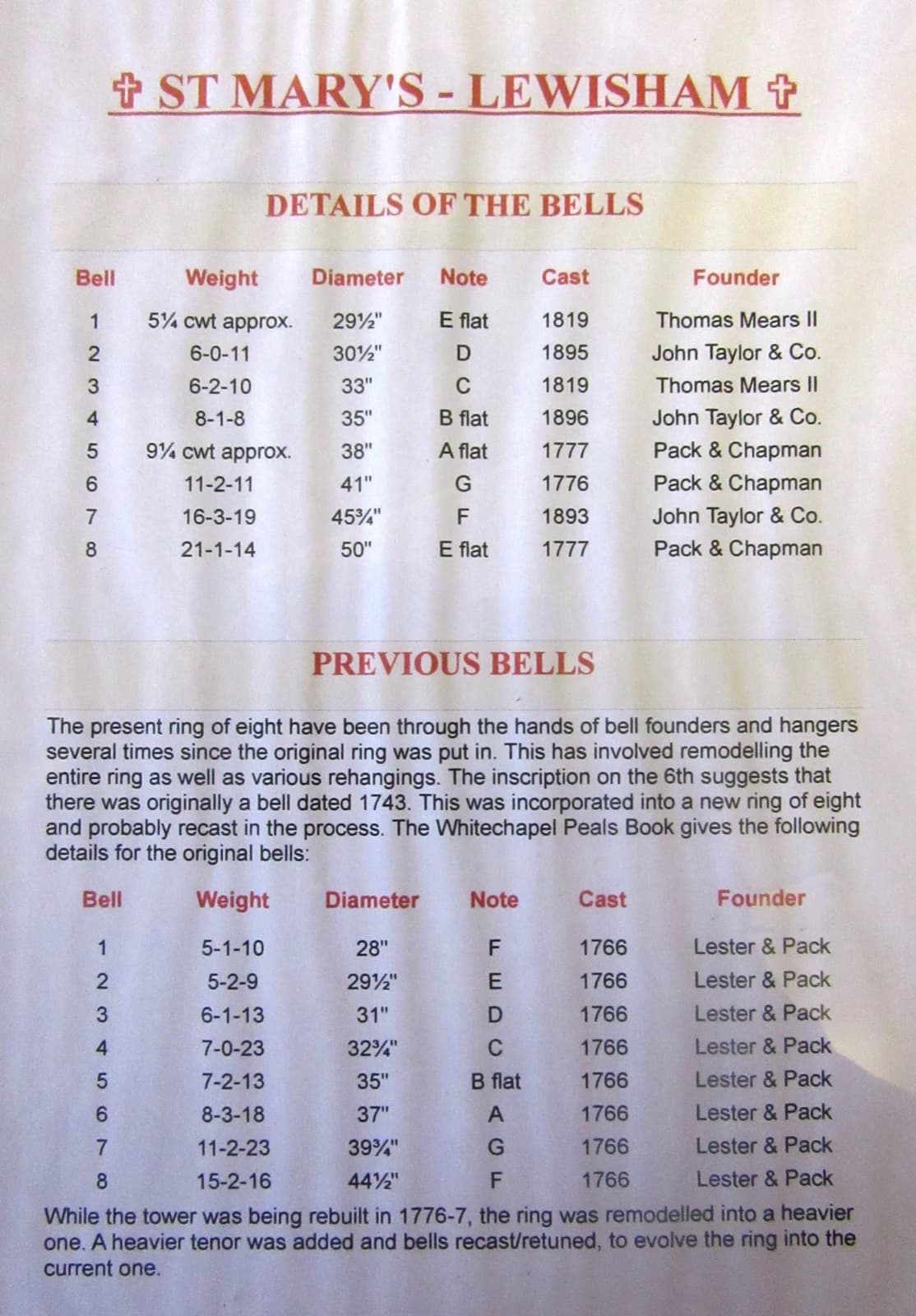
| Bell | Weight | Diameter | Note | Cast | Founder |
|---|---|---|---|---|---|
| Treble | 5¼ cwt approx. | 29½″ | E♭ | 1819 | Thomas Mears II |
| 2 | 6-0-11 | 30½″ | D | 1895 | John Taylor & Co, Loughborough |
| 3 | 6-2-10 | 33″ | C | 1819 | Thomas Mears II |
| 4 | 7-1-13 | 35″ | B♭ | 1894 | John Taylor & Co |
| 5 | 9¼ cwt approx. | 38″ | A♭ | 1777 | Pack & Chapman, Whitechapel |
| 6 | 12-0-21 | 41″ | G | 1743recast 1894, John Taylor | Pack & Chapman, Whitechapel |
| 7 | 16-3-19 | 45¾″ | F | 1894 | John Taylor & Co |
| Tenor | 21-1-14 | 50″ | E♭ | 1777 | Pack & Chapman, Whitechapel |
The ring before this one
The board in the ringing chamber carries a second table, taken from the Whitechapel Peals Book: the eight cast by Lester & Pack in 1766, hung the week the College Youths rang on them. They lasted ten years. When the tower was rebuilt in 1776–7 the ring was remodelled heavier around a new tenor.
| Bell | Weight | Diameter | Note |
|---|---|---|---|
| 1 | 5-1-10 | 28″ | F |
| 2 | 5-2-9 | 29½″ | E |
| 3 | 6-1-13 | 31″ | D |
| 4 | 7-0-23 | 32¾″ | C |
| 5 | 7-2-13 | 35″ | B♭ |
| 6 | 8-3-18 | 37″ | A |
| 7 | 11-2-23 | 39¾″ | G |
| 8 | 15-2-16 | 44½″ | F |
All eight cast by Lester & Pack, 1766.
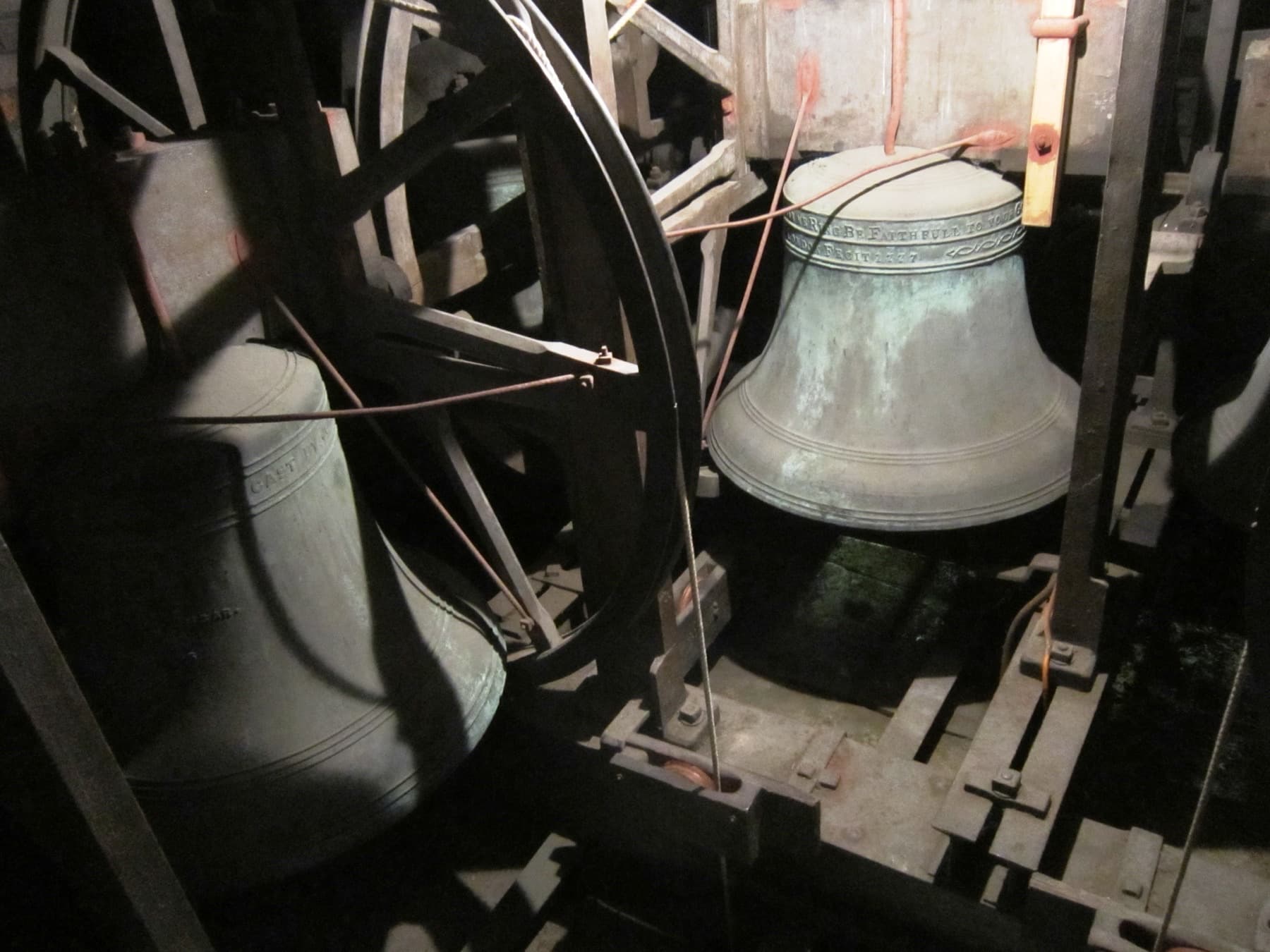
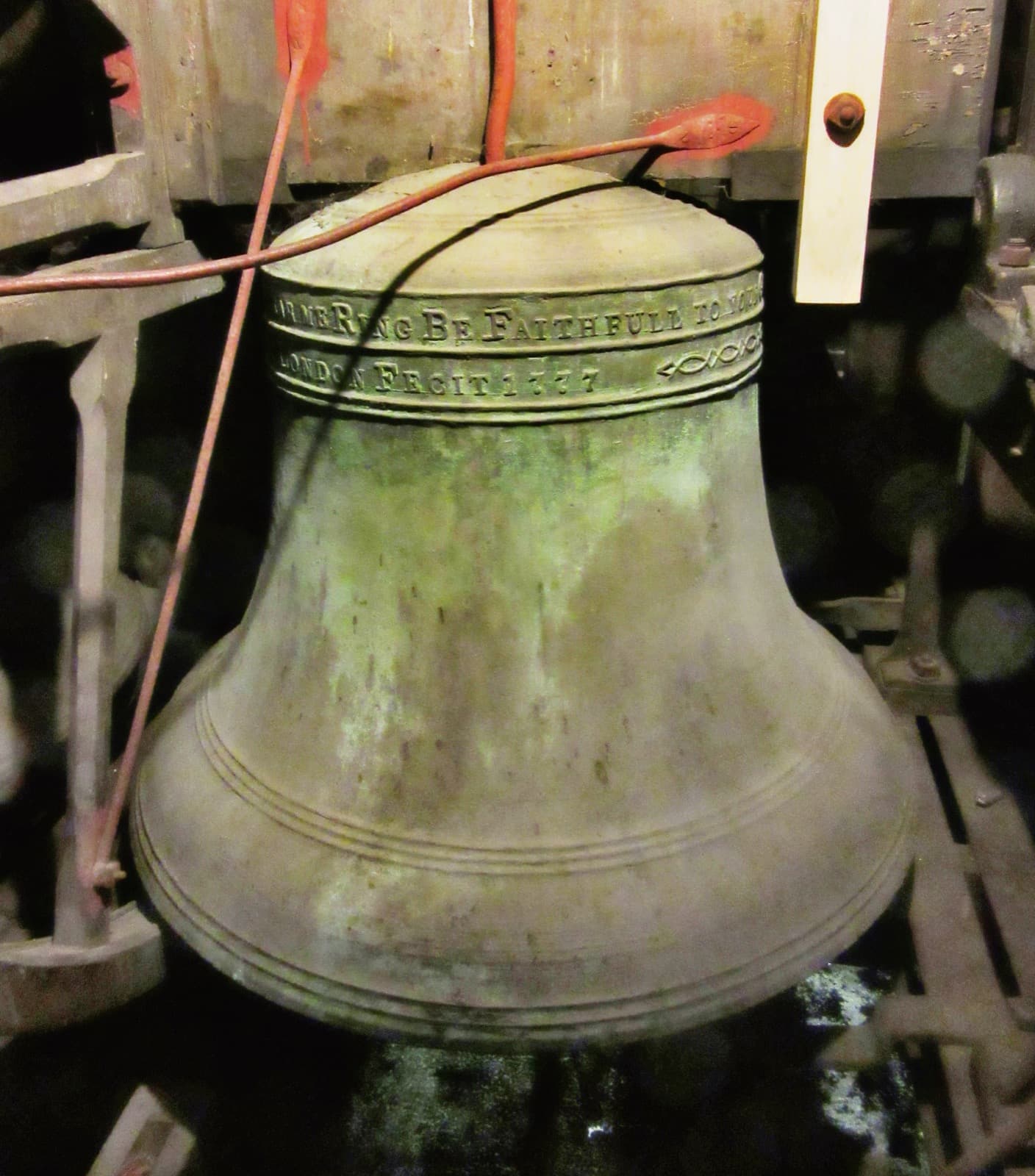
The tenor, cast in 1777, is inscribed: “Ye people all who hear me ring / Be faithful to your God and King.”
Ringing here
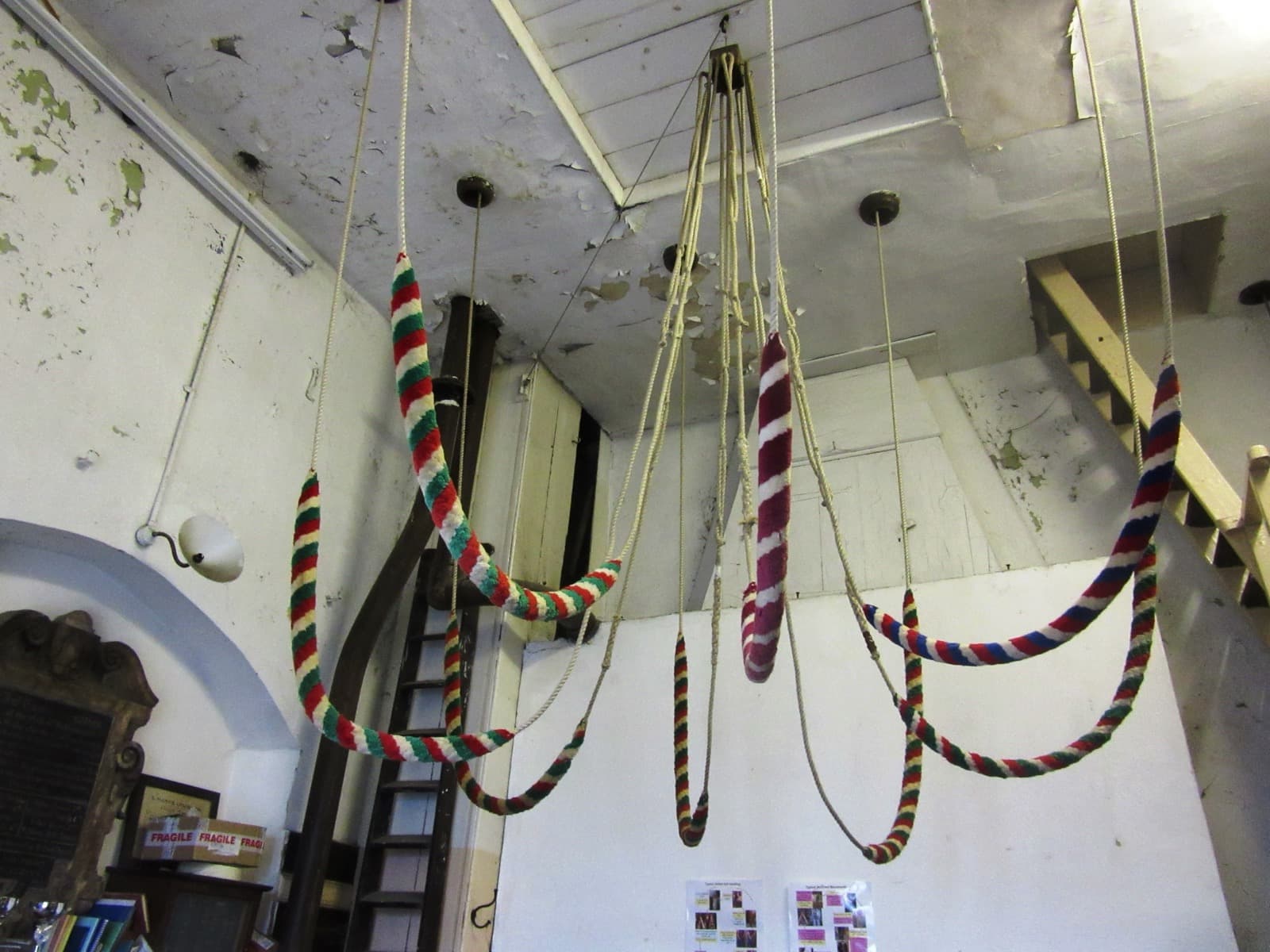
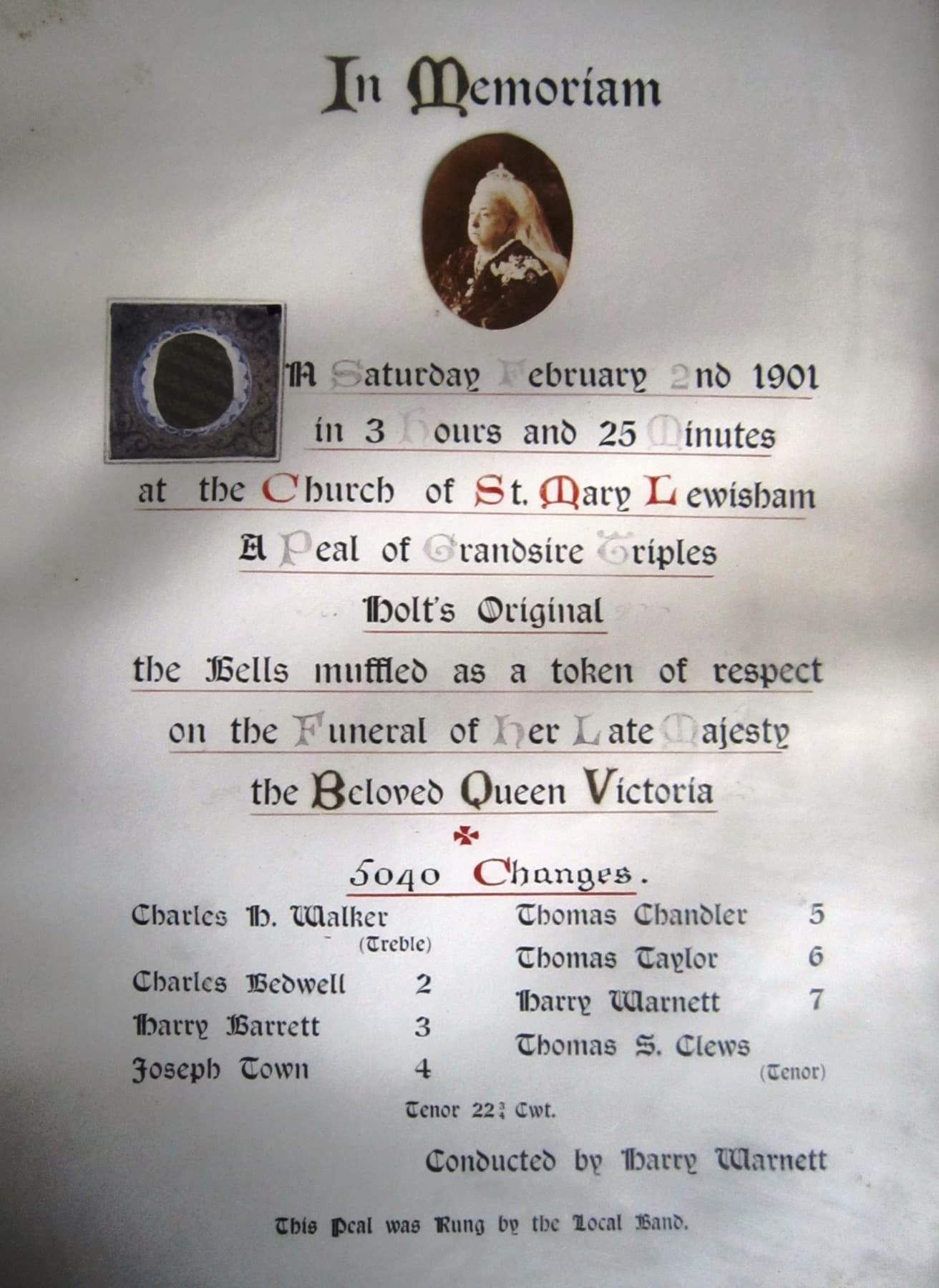
The earliest peal recorded in the Felstead database was rung on 8 March 1766 — Plain Bob Major, on the new ring, the week it was hung. Twenty-two more follow in the eighteenth century and ninety-two in the nineteenth. The database records peals here from 1766 to 2003, and Lewisham has a method named after it.
The bells are rung today by the tower’s band, who practise on Monday evenings. Visiting ringers are welcome — see visiting us.
Five and a half centuries, in order
- 1471
- William Sprigg asks that his tenements in East Greenwich be sold and the money "disposed toward the building of the bell tower in the churchyard of Lewesham". Bequests follow for fourteen years.
- 1498
- Robert Cheseman leaves money "to glaze the grete new wyndowe in the belfrye with the Passion of our Lord".
- 1512
- The tower is completed, following a bequest from William Batt towards the "vice", or spiral stair.
- 1517
- John Francis leaves £3 6s 8d to buy a bell. Further contributions to bells and to the bell frame follow.
- 1552
- A record of four bells.
- 1743
- A bell is cast that survives, recast, as the present sixth.
- 1766
- A new ring of eight is cast by Lester & Pack at Whitechapel. The College Youths ring Bob Major on 8 March and Treble Bob Major on the 16th — and are accused in the local press of taking money for it, which they deny.
- 1774
- Rebuilding of church and tower begins under George Gibson Junior. The tower gains a storey.
- 1777
- Part of the new church collapses on the second Sunday after reopening. The Kentish Gazette judges the tower too weak for the bells and five are to be sold. Instead the ring is remodelled heavier, with a new tenor.
- 1812
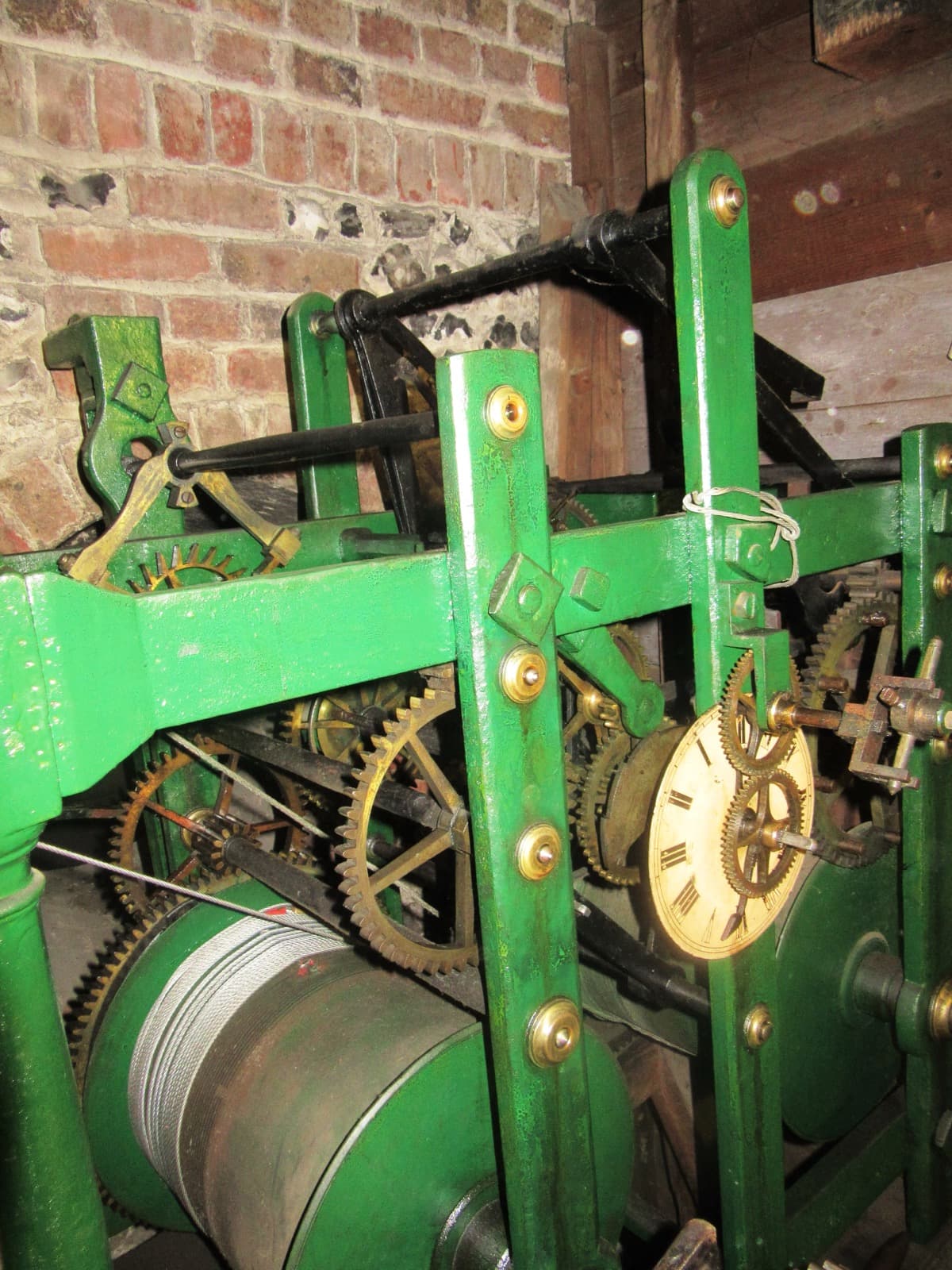
- A clock by Moore of Clerkenwell, with two five-foot dials.
- 1819
- Treble and third recast by Thomas Mears.
- 1859
- The fourth recast by John Warner & Sons.
- 1892
- Two peal boards dedicated: one for the consecration of Dr Legge as Bishop of Lichfield, one for the induction of his successor here.
- 1893
- The bells are in poor repair and an appeal is launched. The seventh, cracked in the crown, is recast by John Taylor.
- 1894
- All eight rehung in a new frame on one level, replacing an oak frame that had them on two. Rededicated on 24 March by the Bishop of Southwark.
- 1896
- The second, cracked, is recast by John Taylor — cast in January 1896, though the inscription says 1895.
- 1902
- A quarter peal of Grandsire Triples — 1,260 changes — is rung on 9 February for the Archbishop of Canterbury's visit, when 1,600 men filled the church and 500 were turned away.
- 1950
- Rehung on ball bearings by Mears & Stainbank. It seems certain the bells never left the tower.
- 1991
- The tower roof is repaired.
Elsewhere on this site
The men in the bequest table are not only tower donors. William Sprigg, who began it, also left a cow to the Trinity guild and a service book to stay in the choir for ever; Richard Walker, who gave five marks towards the steeple, endowed a chantry priest to sing for his soul daily; and Robert Cheseman, who paid to glaze the great new window in the belfry, asked to be buried before the image of St John the Baptist. The parish those wills describe is on the medieval parish, which reads the same documents for what they say about the inside of the building.
The rebuilding that took everything but this tower — and that nearly took the bells, when the Kentish Gazette judged the tower too weak for them — was paid for by selling life annuities to nineteen women, mostly from outside the parish. That is on the history pages, and the man who kept the accounts through it, Ebenezer Blackwell of Martin’s Bank, is on the monuments. Eleven weeks after the new church opened, and about ten weeks after part of it fell down, John Wesley preached in it — the Wesleys at Lewisham.
The two peal boards of 1892 belong to a single family: Dr Legge went from this parish to be Bishop of Lichfield, and the second board marks the induction of the man who followed him here. Both are on the vicars of Lewisham.
Where this comes from
This parish is fortunate in its historians. Three works stand behind these pages, and none of them is ours.
St Mary's Church Lewisham: History (2004, revised 2017)
Julian Watson
Copyright Julian Watson, used with his permission. The greater part of what is written here comes from this book and from his unpublished research, and any of it that is wrong is our doing rather than his.
The Churchyard of St Mary the Virgin, Lewisham (1992)
Ken White
Copyright Ken White, used with his permission.
The Church Record of St Mary the Virgin, Lewisham
The Arts Society Blackheath and The Arts Society Greenwich, completed by the Church Recording Society, 2021–2024
A catalogue of every object in the building, begun in the incumbency of Canon David Garlick and finished in that of Fr Steve Hall. The descriptions, measurements and attributions of the monuments come from it.
The Parish Church of Saint Mary, Lewisham, Kent (1892)
Leland L. Duncan, F.S.A.
Out of copyright, so this is a citation rather than a licence — but it is the single largest source for the medieval parish, the tower bequests, the churchyard, the vicarage house and the medieval vicars, and its six plates are the earliest images the parish has. Duncan was honorary secretary of the Lewisham Antiquarian Society, which met in the parish church hall, and he was educated at Colfe's — the school one of these vicars founded.
The bell details and chronology are from Julian Watson’s research, which takes the ring’s specification from Love’s Guide to the Church Bells of Kent and the peal records from the Felstead database.
Some of these captions are guesses. Please correct us.
The parish archive runs to well over a thousand photographs, most of them unlabelled. Where a caption here rests on a filename rather than on a document, it says so — but we will have got things wrong that we do not yet know are wrong.
If you recognise a place, a face, a date or an object, we would be very glad to hear from you, and we will change the page and say who told us. Photographs of the church before the 1990s re-ordering, and anything at all of the choir, would be especially welcome.
Text and images are the copyright of their authors unless otherwise stated. If you would like to reproduce anything from these pages, please ask us and we will put you in touch with the right person.