History & Heritage
Eleven hundred years
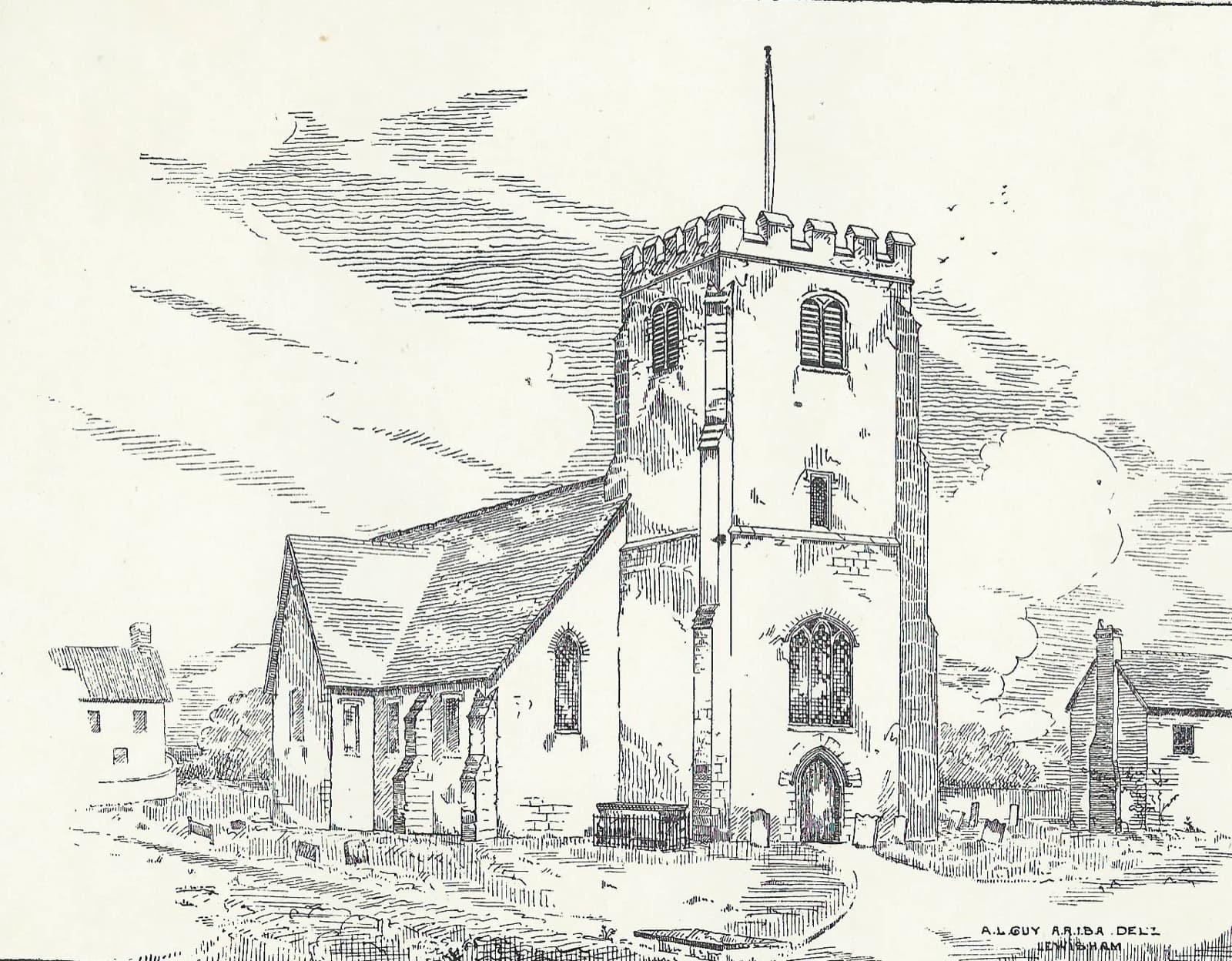
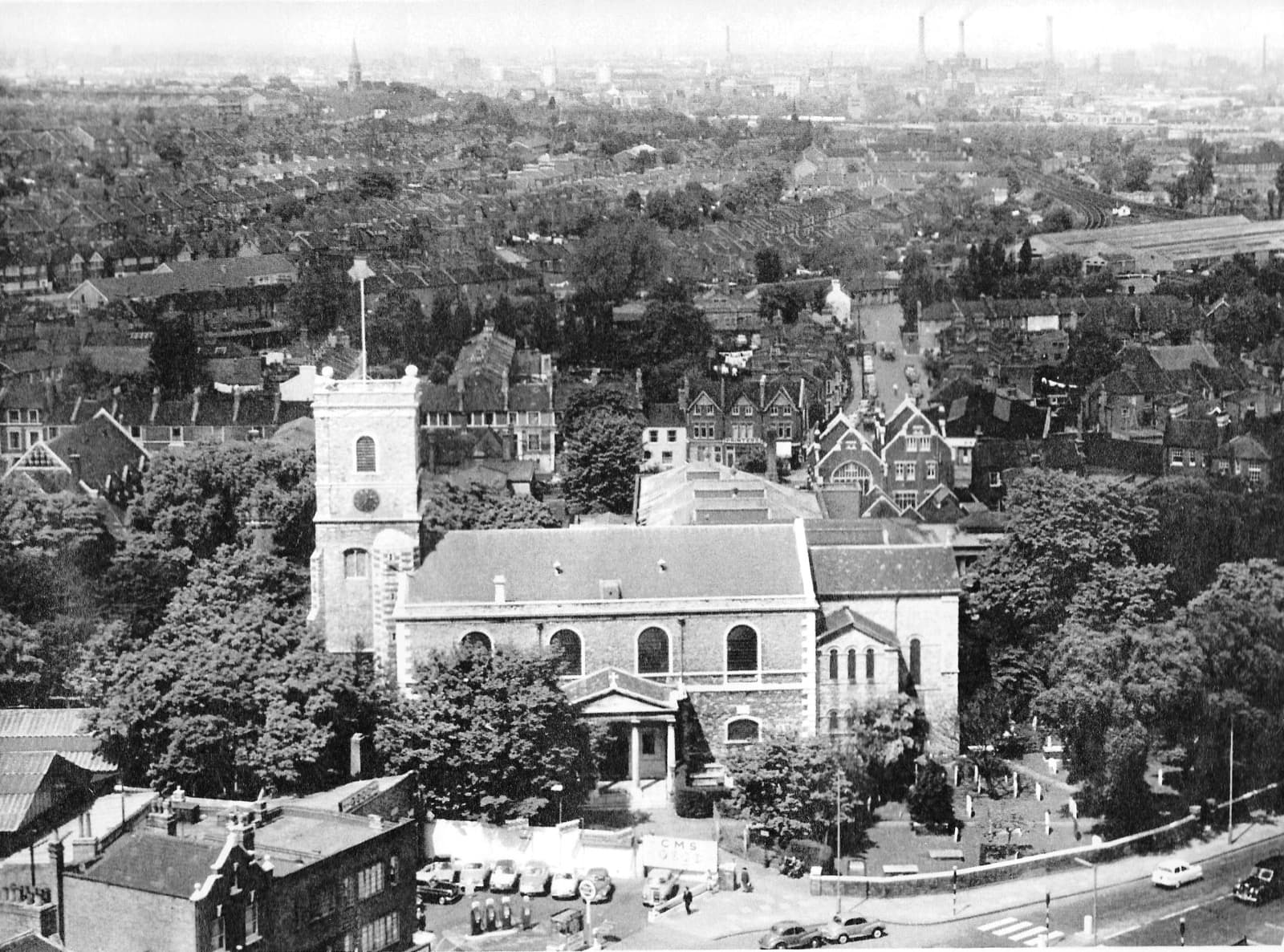
Lewisham was given to a Flemish abbey in 918. There has been a church on this spot since before the Conquest, and the tower has stood since 1512.
St Mary the Virgin is the ancient parish church of Lewisham, standing halfway along one of the longest high streets in London. Until the 1830s it was the only place of worship in a parish that took in Catford, Brockley, Forest Hill, Sydenham, Hither Green, Southend and much of Blackheath — twenty parishes have since been carved out of it.
It has been rebuilt, burnt, rebuilt again and reordered. What follows is the shape of that, and then the parts of it worth their own page.
The story, in order
Tap any entry to open it. Each one says where it comes from, and the ones with more to tell link on.
Beginnings
A gift to a Flemish abbey, and a church nobody can date.
918Lewisham is given to the Abbey of St Peter, Ghent
Ælfthryth — Elstrudis in the Flemish sources — youngest daughter of King Alfred and wife of Baldwin, Count of Flanders, bequeathed Lewisham, Greenwich and Woolwich to the Benedictine abbey of St Peter at Ghent. The validity of the charter is disputed; the abbey's ownership from the tenth century is not. A later charter of 964 mentions churches, but does not say where they were. This is the date the parish kept its 1100th birthday on in 2018 — and it dates the gift of the manor, not the building of a church.
Source: Church Record, foreword by Julian Watson
late 1000sA church on this site
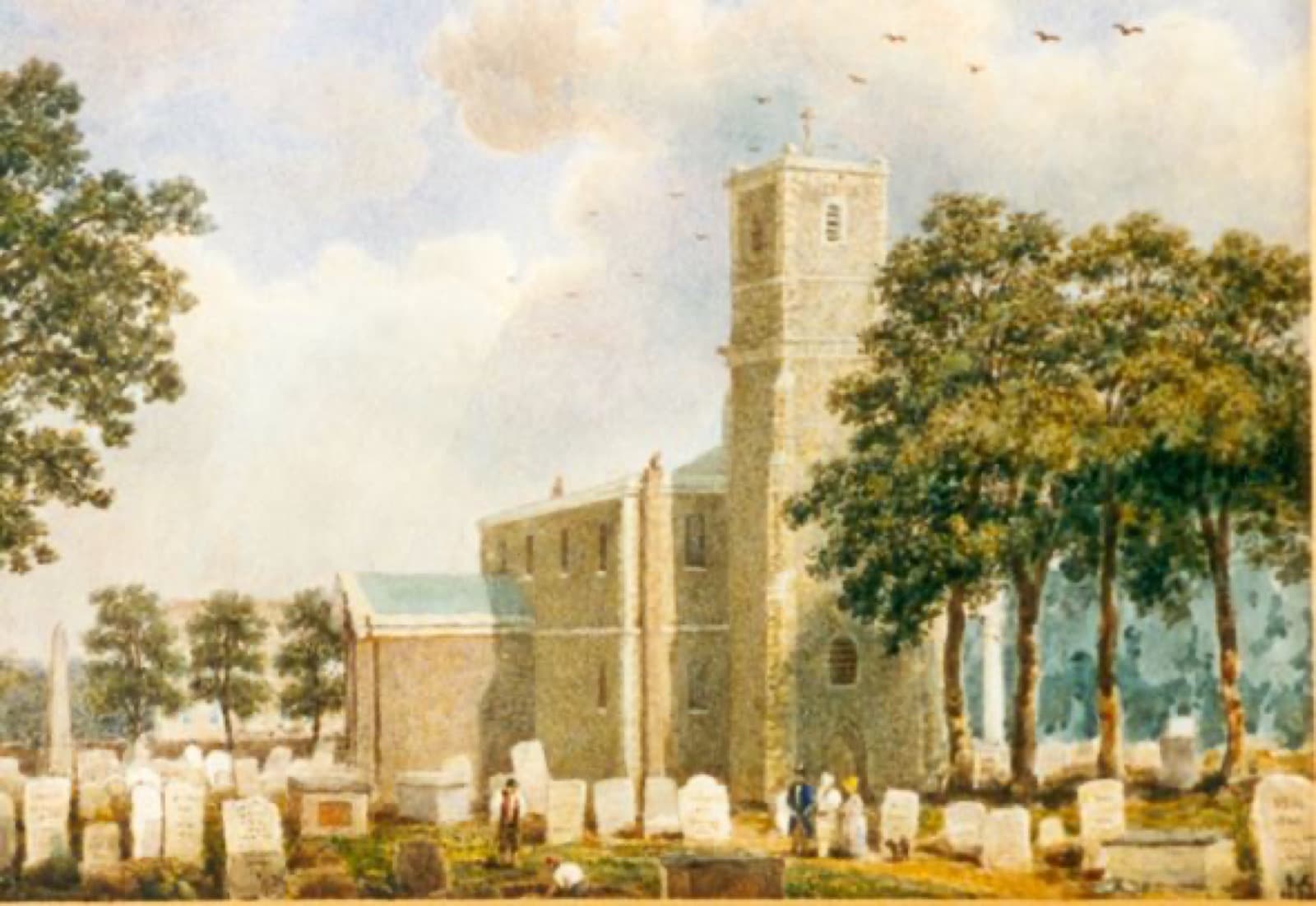
The Church Record dates a church here from the late eleventh century. Nothing of it survives above ground. The first building was probably timber, from the woodland that covered much of the parish. In an eighteenth-century watercolour of the medieval church, the Blackheath antiquary A.R. Martin thought he could make out possible traces of twelfth-century work.
Source: Church Record, introduction and foreword
The medieval church
A tower built out of forty years of small bequests, a woman claiming sanctuary, and the end of five centuries of Flemish ownership.
c.1200The first priest whose name we know
A reference to Geoffrey Chaplain. The list runs unbroken from here to the present day, though the medieval entries are often no more than a name and a date — and sometimes the record of a death rather than an appointment. Nicholas, Pastor, died in 1226; Henry Chaplain was killed accidentally the year after.
Source: Julian Watson, The Vicars of Lewisham
1218“The vicar of Lewisham ought to be properly housed”
An agreement between the Bishop of Rochester and the Abbot of Ghent about the churches of Greenwich and Lewisham and their tithes. It lays down that the vicar of Lewisham ought to be properly housed — a perpetual vicar had only just begun to be appointed here, in place of the chaplains who had served the church until then. It is the beginning of the office rather than of the building.
Source: Leland Duncan, The Parish Church of St Mary, Lewisham (1892)
1254A woman takes sanctuary here
Geoffrey le Bidelede and Margery David beat to death Agnes, daughter of Roger le Biche, and were brought before the court of the Prior of Lewisham as representing the lord of the manor. Margery escaped from the Prior's prison and fled to the parish church, and there, before William Scot the bailiff, abjured the realm. She took sanctuary in this building and bought her life with permanent exile.
Source: Assize Rolls, 1254, in Drake's Hasted; Leland Duncan (1892)
1414–15The end of the Flemish connection
Foreign ownership of English land had become intolerable during the wars with France, and a statute of Henry V declared the alien priories' property seized and vested in the Crown. The following year, in spite of the protests of the Abbot of Ghent, the King settled the manor of Lewisham and the advowson on the Carthusian priory he had just founded at Sheen. Four hundred and ninety-six years of Flemish ownership, ended by an Act of Parliament and an objection that changed nothing.
Source: Leland Duncan (1892); Victoria County History of Kent
1471The tower is begun
William Sprigg asked that his tenements in East Greenwich be sold and the money "disposed toward the building of the bell tower in the churchyard of Lewesham". Bequests followed for the next fourteen years. It is the oldest thing still standing here, and it was paid for a few pounds at a time by people who knew they would not see it finished.
Source: Julian Watson, The Tower
1494A chantry at the Trinity altar
Richard Walker, a London grocer born at Bingley in Yorkshire and living in this parish, endowed a priest to sing daily for his soul at the Trinity altar — the mass of the Angels on Mondays, of the Holy Trinity on Wednesdays, of Our Lady on Saturdays. He directed that every year on the anniversary of his death his will should be read aloud to the parishioners, and left five marks towards building the steeple.
Source: Prerogative Court of Canterbury, 22 Vox; Leland Duncan (1892)
1498The great new window
Robert Cheseman left money "to glaze the grete new wyndowe in the belfrye with the Passion of our Lord". It is clearly visible above the door in eighteenth-century drawings of the medieval tower, made shortly before the rest of the church came down.
Source: Church Record, foreword by Julian Watson
1512The tower is finished
Forty-one years after it was begun, following a bequest from William Batt towards making the "vice", or spiral stair. Flint and Kentish ragstone. In 1517 John Francis left £3 6s 8d to buy a bell, and by 1552 there were four.
Source: Julian Watson, The Tower
Reformation and after
The lights go out and the chantries close; three long incumbencies shape the town; and the living becomes one family's property.
1531Henry VIII takes the manor
Sheen Priory held Lewisham for a little over a century. In 1531 Henry VIII — having first failed to dislodge the Prior on a legal technicality — obtained the manor by exchange, in order to enlarge his estate at Greenwich. It passed afterwards through the Crown, the Earl of Holderness, the Ramsays and Reynold Graham.
Source: Leland Duncan (1892)
1545–1568John Glyn, and the first school
Instituted vicar on 11 October 1545, and the man whose money Abraham Colfe built on a century later. Hasted records that "John Glynn, vicar, in 1564, gave 100l. towards a school in this parish" — the first attempt at free schooling in Lewisham, and the beginning of what became Colfe's School. He was followed as vicar by John Bungay in 1568. The school itself dates its origin to 1574 and credits Glyn with establishing it then, which is hard to square with Hasted having Bungay in the living from 1568; the likeliest reading is that Glyn's money took ten years and his death to become a school, but the parish has not established that and this entry does not pretend otherwise.
Source: Hasted, Survey of Kent, vol. 1 (succession of vicars, and charities); Colfe's School
1547–52The lights go out
The chantries and guilds were dissolved by statute and their endowments seized. The lamps that had burned before the images of Our Lady, the rood and St John the Baptist were put out; the injunctions allowed two candles on the high altar, and in time even those went. When the commissioners inventoried the church goods in November 1552 they found a parish still rich in plate and vestments, almost all of it given by parishioners in wills. Candles were not lit on the altar here again until 1882.
Source: Chantry Certificates 28 and 29; Archaeologia Cantiana IX; Leland Duncan (1892)
1595–1610Hadrian à Saravia
The vicar under whom Abraham Colfe served his six years as curate, and a considerable figure in his own right. Saravia was born at Hesdin in Artois in 1532 and came to England from the Low Countries; in 1607 he was named to Lancelot Andrewes's First Westminster Company, the group that translated Genesis to the end of 2 Kings for the King James Bible, and he was one of only three of its translators born outside England. He was a friend of Richard Hooker and absolved him on his deathbed. He argued, unusually for the time, that the Church's commission to send missionaries had never lapsed. He left Lewisham in 1610 for the rectory of Great Chart, and Colfe was inducted here on 1 May that year.
Source: Hasted, Survey of Kent, vol. 1 (succession of vicars); King James Bible Translators
1604–1657Abraham Colfe
Curate from 1604 under Saravia, then vicar for forty-seven years from 1610 — over fifty years of ministry here in all, and the only local vicar not ejected under Cromwell. He founded a grammar school on the earlier gift of John Glyn, vicar here a century before him, and an elementary school, almshouses and a public library, and led a successful campaign to stop three courtiers of James I destroying the woods at Sydenham. He also put a bench by the priest's door so that elderly parishioners could rest.
Source: Church Record, foreword by Julian Watson
1643Margaret Colfe
Abraham Colfe's wife, buried here, and remembered on a memorial in her own right: "having bene above 40 years a willing nurse, midwife, surgeon, and in part physitian to all, both rich and poore, without expecting reward". She was nearly 79.
Source: Church Record, Memorials; Julian Watson
1673The Legges acquire the living
Reynold Graham, a London draper and the only lord of the manor buried in this church, had no children. By a deed of 30 May 1673 he conveyed the manor and the advowson to his nephew George Legge, afterwards Baron Dartmouth. The family presented its first vicar four years later and has held the patronage ever since — the Earl of Dartmouth is still patron of this parish today.
Source: Leland Duncan (1892)
1689–1728George Stanhope rebuilds the vicarage
Vicar for thirty-eight years, also Vicar of St Nicholas, Deptford and Dean of Canterbury from 1703. He rebuilt the vicarage at his own expense in 1692–3; the building survives as Ladywell House. His monument calls him "Grave without Preciseness, Facetious without Levity".
Source: Church Record, Memorials; Julian Watson
1692–93Stanhope rebuilds the vicarage, and keeps the receipts
George Stanhope pulled down the old vicarage house, cleared the rubbish, dug the foundations and rebuilt it — paying, as far as anyone can tell, himself. He also itemised the whole cost in his diary: 70,000 place bricks from Mr Nicholas Goodwin of Hammersmith, the sawyers, the lime man, 2,700 tiles and a half, the locksmith, the painter. His total was £739 13s, summed from particulars he could no longer find, and besides many other bills mislaid or lost. In 1723 he noted that his wife had paid more than £70 towards the repairs out of her own allowance. The house stands, as Ladywell House.
Source: Stanhope's diary of receipts, in Leland Duncan (1892)
The Georgian rebuilding
The medieval church comes down, and the new one nearly follows.
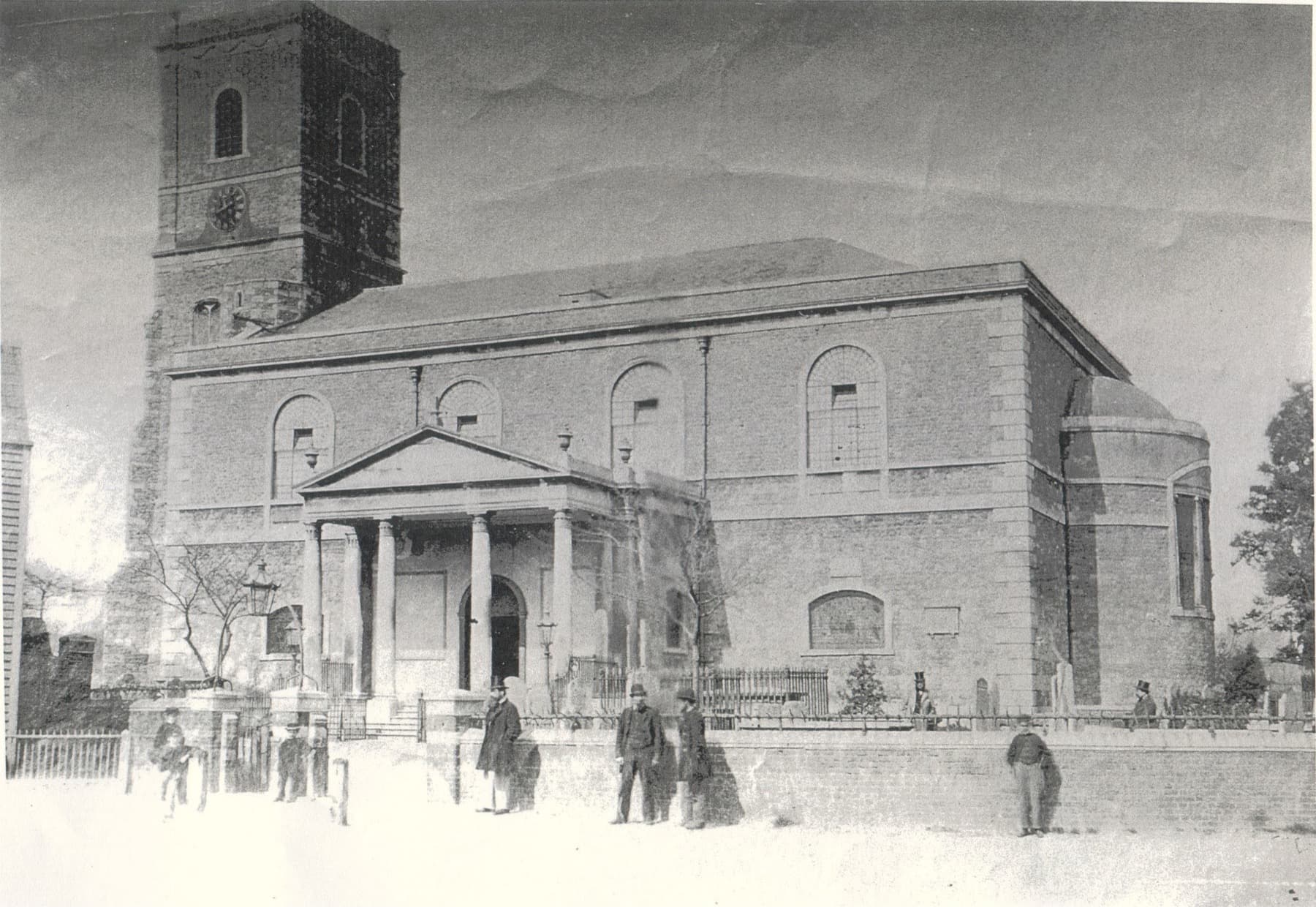
1774The medieval church is taken down
Damp, and a need for more room. Only the tower was kept, gaining an extra storey. The architect was a local man, George Gibson Junior; the builders were Oliver Burton & Co. What was lost is known mainly from a drawing of about 1764 and from J.C. Barrow's description written to accompany his 1798 aquatint.
Source: Church Record, introduction; Julian Watson
1775The church is paid for with life annuities
The Act of 1774 let the trustees borrow £5,000 on the security of the church rate, and they raised it by selling life annuities. Nineteen people bought them, mostly women and mostly not from Lewisham — widows and spinsters from Shrewsbury, Cirencester, Oxford, Devon, Bloomsbury, Rotherhithe and Greenwich. Mrs Joanna Boyle, aged 45, of Windmill Street, paid £200 for fourteen pounds a year for life. The last annuitant, Mrs Martha Munn, died on 10 June 1840 — sixty-three years after the church opened, and still being paid for it.
Source: Trustees' minute book, in Leland Duncan (1892)
1777The new church opens — and part of it falls down
The first Sunday of its opening was 7 September 1777. On the second Sunday, part of the east side collapsed, hurting one woman. The Kentish Gazette judged the raised tower too weak to carry the ringing of the bells, and it was decided to sell five of them. In the event the opposite happened: the whole ring was remodelled into a heavier one.
Source: Julian Watson, The Tower
1795–1815A parishioner becomes the Grenada planters' man in Parliament
William Lushington, MP for London and later buried here, served twenty years as agent for Grenada — the paid London representative of the colony's slave-owning planters. His daughter Mary's monument, carved by Flaxman, is on the nave wall. At abolition his other daughters were paid compensation for 218 enslaved people.
Source: History of Parliament; UCL Legacies of British Slavery
1798Flaxman's monument to Mary Lushington
The finest thing in the building: a signed work by John Flaxman R.A., with a verse by the poet William Hayley, commissioned by Mary's mother Paulina after her daughter died at twenty-five. Originally on the east wall of the nave; moved when the chancel was built in 1880.
Source: Church Record, Memorials 023
1817The churchyard is enlarged
Part of the garden of Lewisham House, which stood on the corner of Ladywell Road and the High Street, was taken into the churchyard. The house itself — once home to Sir John and Anne Lethuillier, of whom Pepys wrote "our noble fat brave lady in our parish" — was demolished in 1894.
Source: Julian Watson, churchyard notes
The Victorian church
Fire, a rebuilding, and a parish growing so fast it had to be divided twenty times.
1830Fire, on the day after Christmas
It broke out shortly before the morning service. The canal was frozen and there was little water; three hundred newly sworn special constables and the new Police cleared the ground for the engines from Deptford. The vestry, north wing and galleries went, and nearly everything but the outer walls and the roof. The organ escaped with slight injury and some of the communion plate was saved. The building was not insured. Arson was suspected at first; the cause turned out to be the flues of the large stove that heated the church, and it started in the vestry.
Source: The Morning Chronicle, 27 December 1830
1835–36Compensation is paid for 218 people
Slavery was abolished across most of the British empire in 1834. Parliament voted £20 million to compensate the owners for the loss of what the law counted as their property — and nothing at all to the people who had been enslaved, who were then held in unpaid "apprenticeship" for four years more. Charlotte and Augusta Lushington, sisters of the Mary commemorated on our nave wall, were among those paid: £3,201 for the 124 people held at Mount Nesbitt in Grenada, and £4,321 for the 94 at Union Estate in Trinidad. Those 218 people were named in registers at the time, and the registers survive.
Source: UCL Legacies of British Slavery, claims T71/880 and T71/519
1854–1938Nineteen parishes are carved out
As the railways arrived and the population rose faster than anywhere near it, the ancient parish was divided again and again — beginning with St Bartholomew, Sydenham and Christ Church, Forest Hill in 1854 and ending with St Dunstan, Bellingham in 1938. Nineteen churches in eighty-four years, every one of them once part of St Mary's. The Vicar of Lewisham is still patron of three of them.
Source: Church Record, Julian Watson
1881The church is remodelled for a growing parish
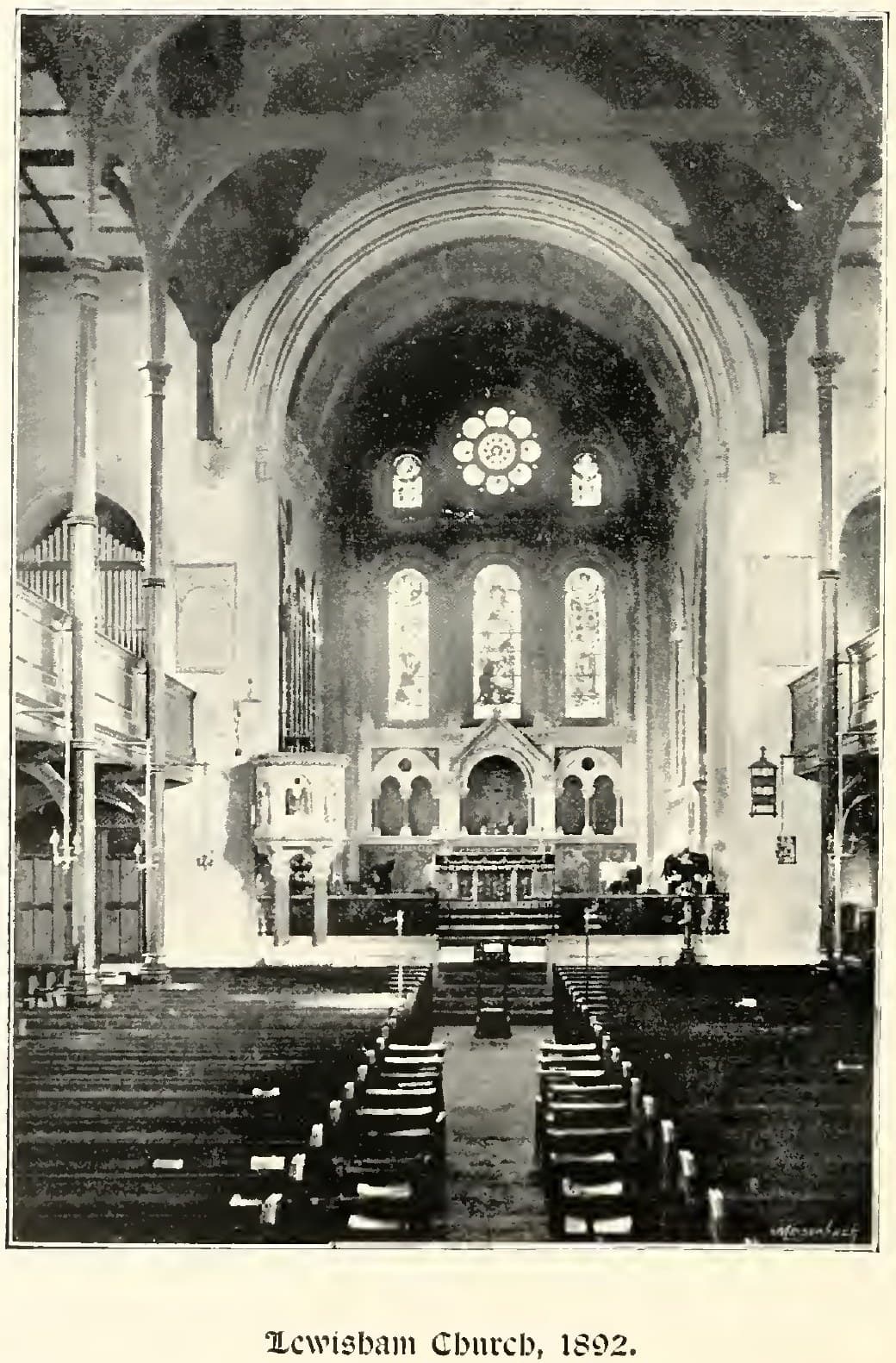
Much of the interior you see now: the timber arcades, the benches that replaced the box pews, a new pulpit and font. The apse came down and the present chancel was built to the design of Sir Arthur Blomfield. The west gallery went, and the organ with it.
Source: Church Record, introduction
1890Lewisham's first girls' secondary school
Founded at Rushey Green under the will of Dr Joseph Prendergast, for twenty-six years headmaster of Colfe's School, on land given by the Leathersellers' Company. His endowment was supplemented from several of the ancient charities of this parish — the last point at which the money two vicars had left enters the story.
Source: Prendergast School; the Leathersellers' Company
1902Sixteen hundred men, and five hundred turned away
Lewisham's population was rising faster than anywhere near it, and the parish was running Sunday schools for over a thousand children with sixty teachers, mission services in a hall on Campshill Road, and open-air services on the church steps in summer. On 9 February 1902 the Archbishop of Canterbury, Frederick Temple, came to preach — to men only, as was then the fashion for such missions. "Over 1,600 men were crowded into the church, every seat and all the aisles and staircase even being thronged… It is computed that over 500 had to be sent away." The overcrowding was the point: it was an argument for building more churches. Between 1854 and 1938, twenty new parishes were carved out of this one.
Source: Parish Magazine, March 1902; J.A.B. Robertson, Historical Notes
The twentieth century
War damage and new glass; a bishop living in the vicarage; and the church that held the New Cross Fire memorial.
1916The Roll of Honour
The parish printed the names of everyone serving from St Mary's, grouped by the organisation they belonged to: sacristans, the choir, Sunday school teachers, the Church of England Men's Society, the Church Lads' Brigade, the Guild of King Alfred, the Old Boys and the Boy Scouts. Several hundred names, with a cross printed before those already dead — and further marks added later, by hand, as the news came in.
Source: Roll of Honour, 1916, in the parish's own papers
1931The Lady Chapel
Created beneath the north gallery to mark the thousandth anniversary of the church, designed by Martin Travers, with a painting by Frank John Stanley at the centre of the reredos.
Source: Church Record, introduction; Julian Watson
1952–54New glass after the war
Many windows had been reglazed with clear glass to replace those shattered by war damage. Between 1952 and 1954 they were filled with stained glass by A.L. Wilkinson, son of Horace Wilkinson and trained at St Martin's School of Art.
Source: Church Record, Windows; Julian Watson
1963Renewal: a new roof, and a crèche
Three years of stewardship giving paid for the church to be re-roofed — the appeal brochure has the workmen on its cover — and for heating in the parish hall. The vicar, Francis Longworth-Dames, wrote to the parish about money and refused to apologise for it: "What we spend our money on shows what we really care about." The change he was proudest of was a crèche above the churchwardens' vestry, staffed by a rota of volunteers, for children too unruly to stay in the pews.
Source: Renewal, 1963, in the parish's own papers
1978A bishop moves into the vicarage
The Bishop of Woolwich, Michael Marshall, announced the Lewisham Experiment: the twenty-two-room vicarage of St Mary's was to become an open household and a small resident community of "men and women, different denominations, and hopefully different cultures". He was instituted to the living himself and committed the pastorate to a vicar, who would hold a cure of souls "both mine and his". It is why the succession has a gap between Harold Bear in 1977 and David Garlick in 1979.
Source: Southwark News, April 1978
1983The Defence Secretary lights a candle
A twenty-four-hour peace vigil in the church, and the first candle lit by Michael Heseltine, Secretary of State for Defence — the same week the General Synod rejected the unilateralist report The Church and the Bomb. The vicar, David Garlick, was himself a unilateralist. He invited Heseltine, and wrote the words for him to say: lines from the Te Deum that the author of the rejected report had used to conclude his own speech to the Synod.
Source: The Guardian, 12 February 1983
1984The New Cross Fire memorial
Thirteen young Black people died in a house fire on New Cross Road on 18 January 1981; Anthony Berbeck, who survived it, died two and a half years later and is counted with them. The memorial service was held in this church on the third anniversary. David Garlick welcomed and read the Gospel; a Black Pentecostal bishop and a Roman Catholic priest led the prayers; United Reformed and Methodist ministers read the lessons; St Mary's choir sang the Russian Contakion; and the sermon was preached by Sybil Phoenix. The commemoration is now led by St Andrew's URC in Brockley.
Source: Order of service, in the parish's own papers
1995–96The re-ordering
Rewiring, new heating, the main entrance re-aligned, a refurbished sacristy, an office in the south gallery and — at last — a lavatory. A digital organ replaced the pipe organ, which allowed the old sanctuary to become the chapel of St Peter. A new altar was placed in the chancel and the pulpit moved. The whole scheme, including the Virgin and Child and the tabernacle, was designed by the artist Keith Murray (1929–2005); the Twentieth Century Society has visited the chancel several times.
Source: Church Record, introduction; Keith Murray's authorship from Julian Watson
Now
Eleven hundred years, and still the parish church of Lewisham.
2018Eleven hundred years
The parish kept the 1100th anniversary of the gift of Lewisham to Ghent on 23 September 2018, with visitors from Ghent among the congregation — the abbey and the parish still in touch after eleven centuries.
Source: Parish records
How the Georgian church was paid for
The decision was not taken lightly. A vestry of August 1773 appointed a committee — the Earl of Dartmouth, the vicar, seven parishioners and the two churchwardens — to look at the defects in the old building. Two architects reported cracks and settlements in the Gothic piers and side walls, a roof “very ruinous”, and pews rotted by continual damp. A thorough repair would cost £900 and they could not promise it would be dry afterwards.
A second surveyor, John Gorham, found the timber rotten throughout because the floor lay below the level of the ground outside, and said the floor would have to come up four feet. Since that meant raising the roof as well, the vestry concluded it would be better to build a new church. An Act of Parliament followed in 1774, George Gibson’s plan was approved that July, and of fifteen tenders — ranging from £5,150 down — Oliver Burton & Co. got the work at £4,086.
The damp had a cause, and it was not the builders. A. J. French put it plainly a century and a half later: there were several streams in close proximity to the church, and in wet seasons the old building stood practically in water meadows. The Ravensbourne and the Quaggy are still there. The Georgian church answered the problem by standing well clear of the ground the old one had sunk into.
The money came from an unusual place. The Act let the trustees borrow £5,000 on the security of the church rate, and they raised it by selling life annuities. The nineteen people who bought them were mostly women, and mostly not from Lewisham: widows and spinsters from Shrewsbury, Cirencester, Oxford, Devon, Bloomsbury, Rotherhithe, Greenwich and Camberwell.
And the Act said where the yearly payments were to come from: it made provision for letting the gallery pews. The galleries on three sides of the new church were not simply seating. They were the income that paid the annuitants, which is why a parish that had just borrowed £5,000 built as many of them as it did.
The first entry in the trustees’ book sets the pattern. Mrs Joanna Boyle, aged 45 years, of Windmill Street, Tottenham Court Road, widow, paid £200 in June 1775, for which she was to receive fourteen pounds a year for the rest of her life. The parish was, in effect, betting against her; she was betting on herself.
The last annuitant was Mrs Martha Munn, and she died on 10 June 1840. The church had been open sixty-three years by then, and the parish was still paying for it.
All of this comes from the trustees’ account and minute books, which escaped the vestry fire of 1830. Duncan worked from them in 1892 and recorded that they were then kept in the vestry safe.
1931: a thousand years
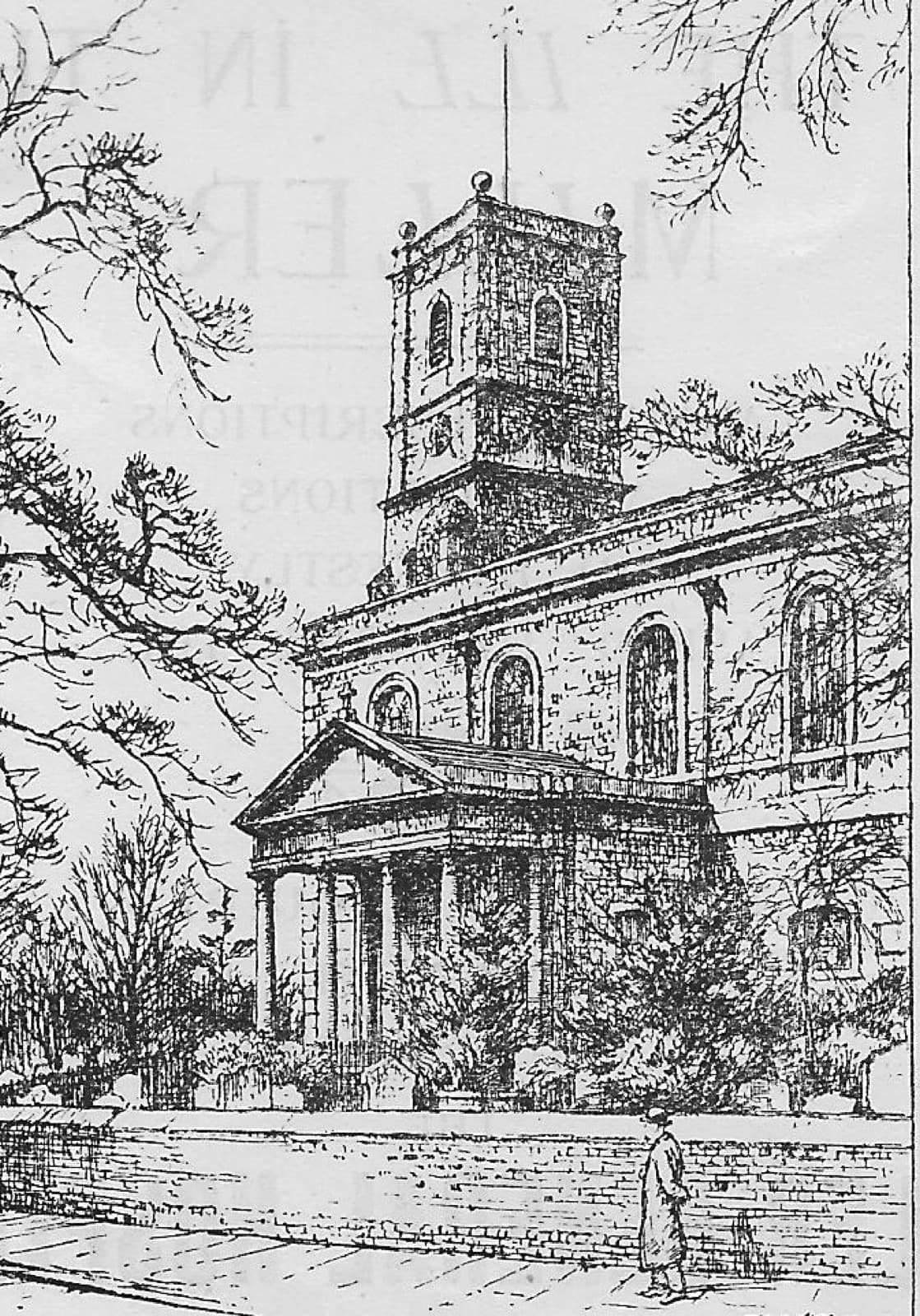
The church kept its millenary in 1931, and did it properly: a fortnight of services and a pageant, from 31 May to 14 June, billed without hedging as the 1,000th Birthday Festival. Afterwards the Parochial Church Council recorded its thanks to everyone who “in ways, seen or unseen, gave of their time, strength and skill”, and hoped that all who shared in it would have “very happy memories of S. Mary’s 1,000th Birthday”. The drawing below is from the programme.
A thousand years in 1931 implies a foundation about 931. Eleven hundred years in 2018 implies 918, the date of the grant to Ghent. The parish has kept both, and the Ghent connection sets out why neither is certain.
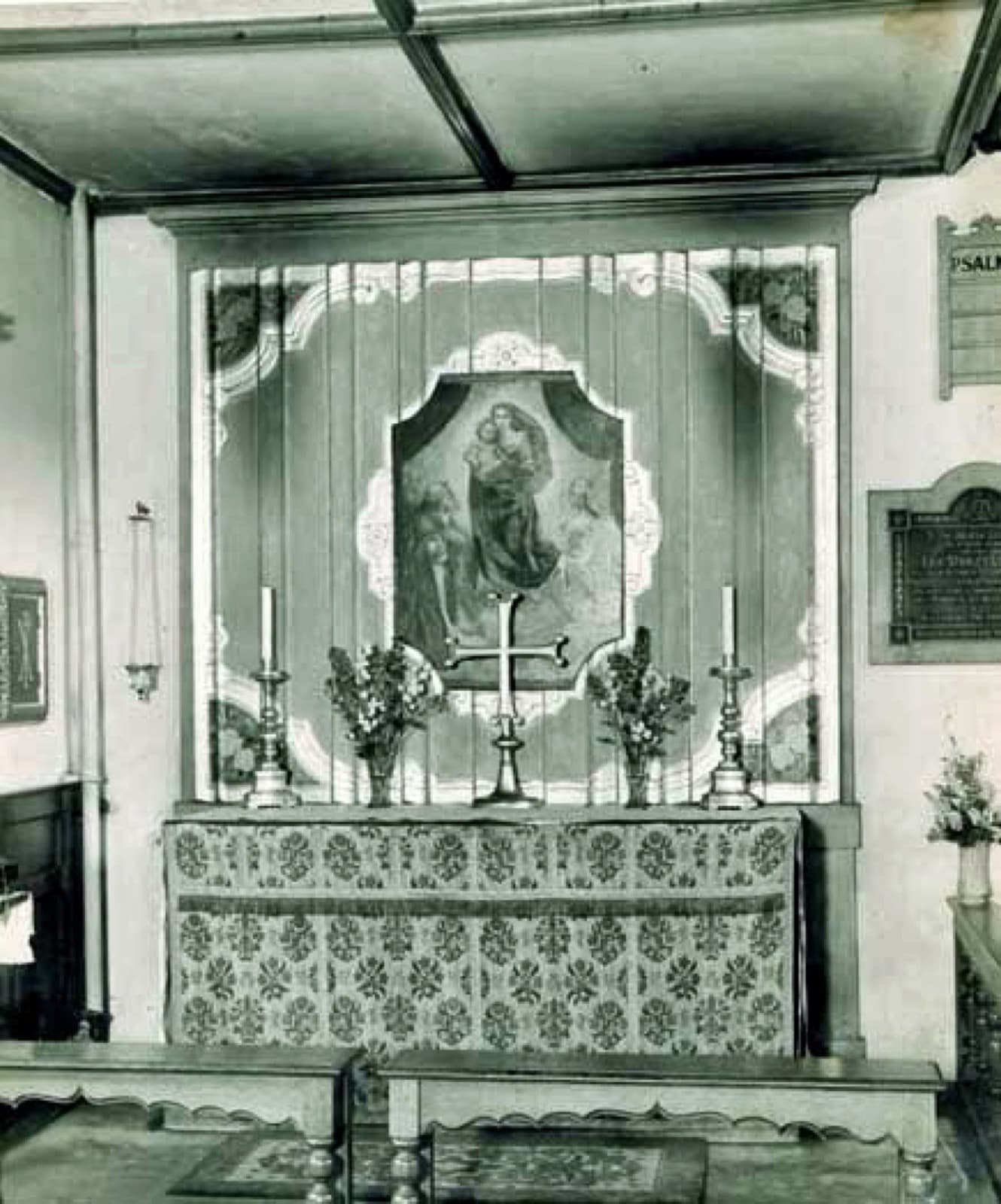
The lasting thing from that year is the Lady Chapel, made under the north gallery to mark the anniversary. It was designed by Martin Travers, the most distinctive English church designer of his generation, with a painting by Frank John Stanley at the centre of the reredos.
The reredos is still here, and almost nobody finds it. It now hangs on the roof of the Lady Chapel, facing downwards. The photograph above is how it stood in 1931. To see it today, stand in the chapel and look up.
The re-ordering, 1995–96
The last great upheaval, and the one that made the building work again: rewiring, new heating, the main entrance re-aligned, a refurbished sacristy, an office in the south gallery and — at last — a lavatory. A digital organ replaced the pipe organ, which freed the old sanctuary to become the chapel of St Peter — named for the abbey in Flanders that owned this parish for four hundred and ninety-six years, whose story is on the Ghent connection. A new altar went into the chancel and the pulpit was moved.
All of it was to the design of Keith Murray (1929–2005) — including the Virgin and Child and the tabernacle. Murray was an artist rather than an architect, and designed only a few churches; members of the Twentieth Century Society have made several visits to see this chancel.
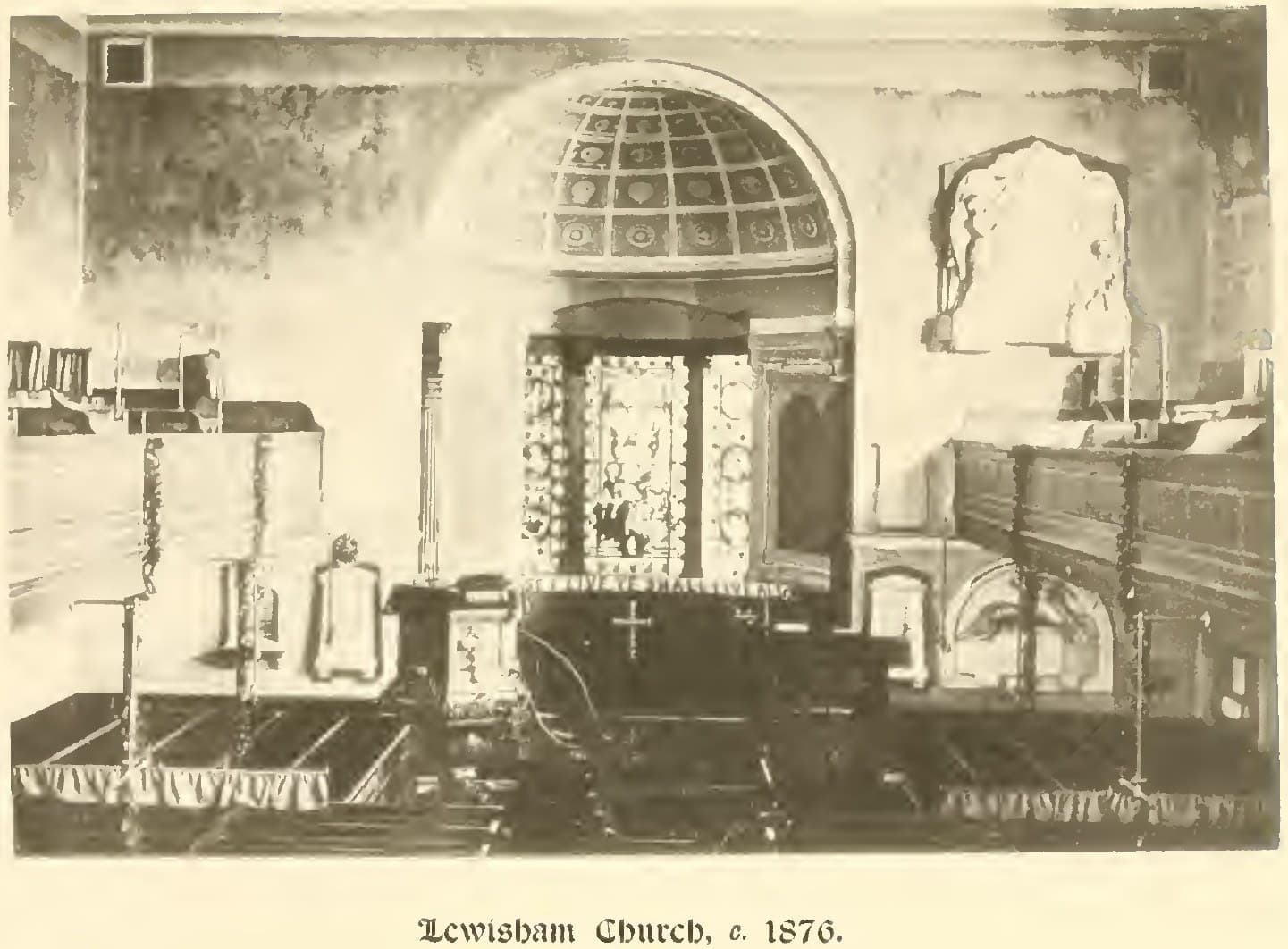
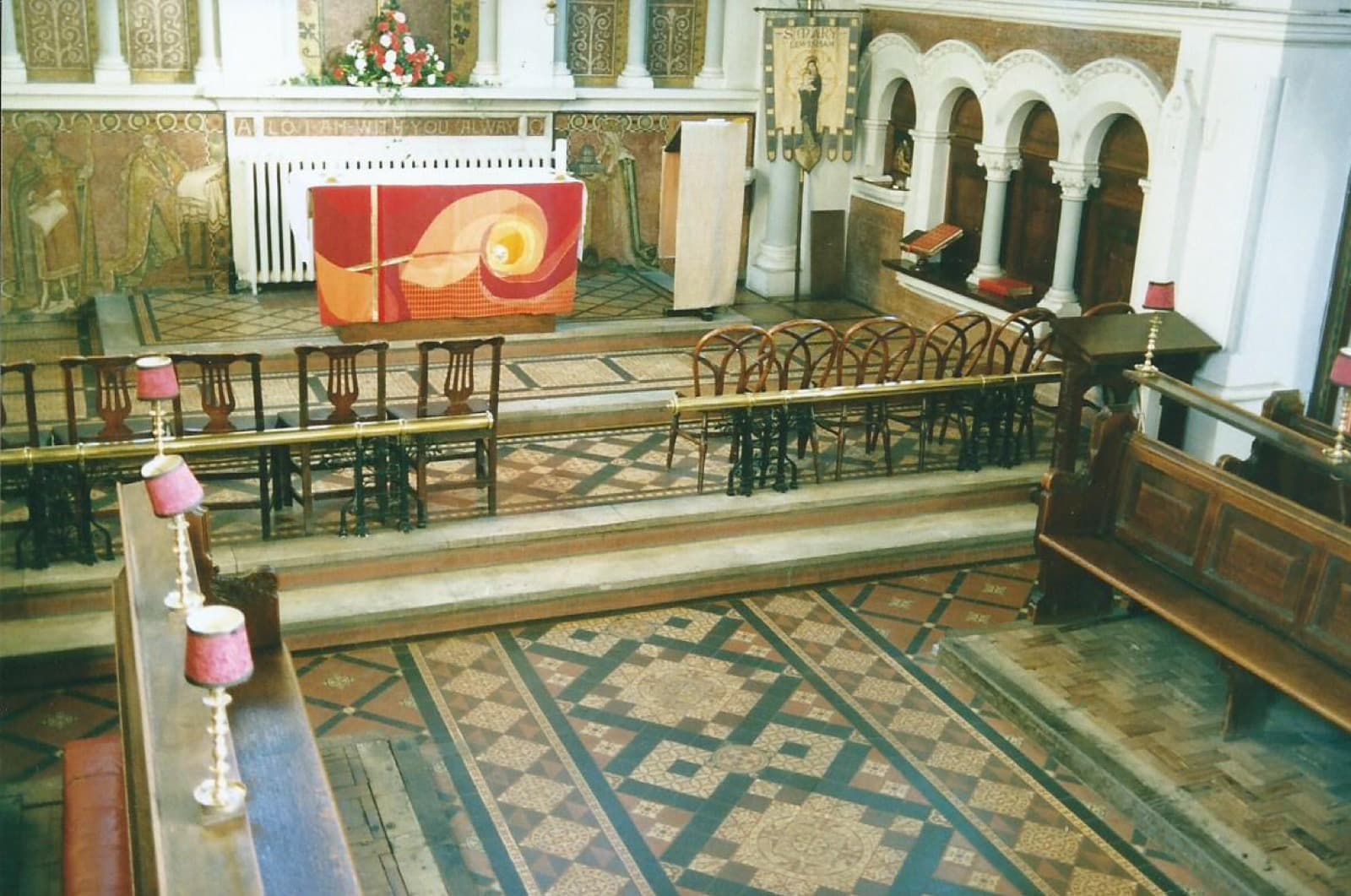
That is the chancel as it was: a patterned tiled floor, choir stalls facing one another across it, and Lo, I am with you alway lettered along the wall above the altar.
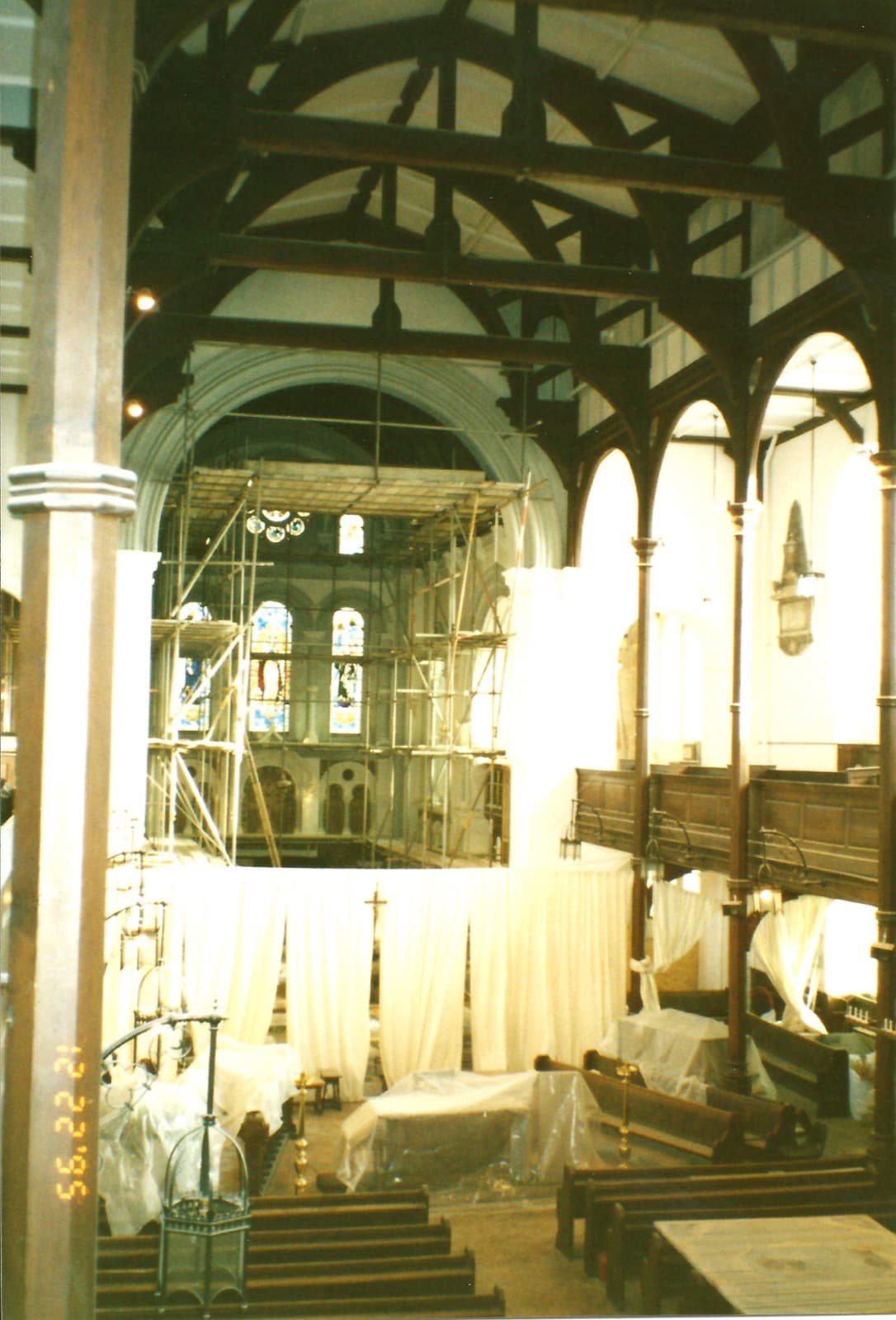
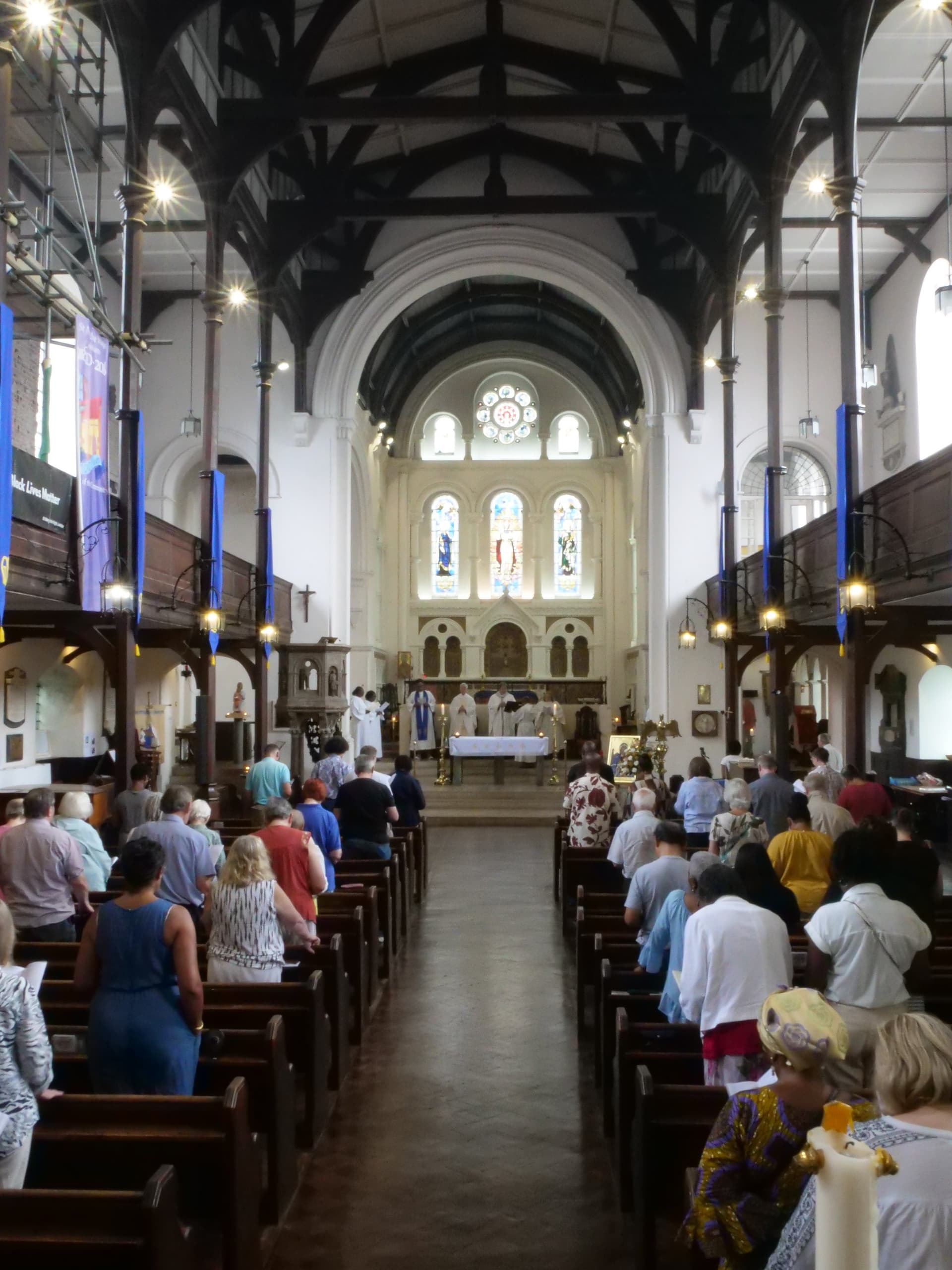
And that is the same church in May 1996 — sheeted, scaffolded and shut, with the pews under plastic and the east window boarded behind the staging. The photograph at the foot of this page looks down the same nave on an ordinary Sunday thirty years later.
The rest of the history
Eleven pages, grouped. Each one says where it comes from, and the ones with more to tell link on to each other.
The parish itself
How Lewisham came to have a church, who owned it, and how far it once stretched.
- The Ghent connectionFor 496 years this parish belonged to an abbey in Flanders. Given away by Alfred the Great's youngest daughter, and taken back by Henry V over the Abbot's written protest.
- The ancient parishOne church for the whole of Lewisham, from Blackheath to Sydenham. Nineteen parishes were carved out of it in under a century, and the old line still decides who can apply to the parish charities.
- The medieval parishCandles before painted images, priests paid to sing for the dead, guilds that worked like friendly societies — and a widow who left her crimson kirtle to be made into a vestment.
- The twentieth centuryA bishop who moved into the vicarage and made it a community, and the parish church that held the memorial service for the thirteen who died in the New Cross Fire.
- Ladywell, and the wellThe holy well that gave the neighbourhood its name, and what became of it.
The people
The men who held the living, the people commemorated in the building, and what two vicars' money is still doing.
- The Wesleys at LewishamJohn Wesley preached in this church on 23 November 1777, for a society that existed to revive the drowned. For forty years before that, Lewisham was where he came to write — including the evening he wrote his own epitaph.
- Leland DuncanA War Office clerk who reconstructed this parish out of other people's wills, in his own time. Almost every page here rests on him — and his own grave went seventy-five years without a headstone.
- The vicars of LewishamUnbroken since about 1200: a translator of the King James Bible, a Dean of Canterbury, and three men from the family that owned the right to appoint them.
- The vicarage houseIn 1692 the vicar pulled down his own house and rebuilt it at his own expense — then wrote down what every part of it cost, down to sevenpence for altering a chimney.
- The monumentsA signed Flaxman, a midwife who took no payment for forty years, a dentist, an entomologist and the first stamp collector in the world.
- The schools and the LeathersellersA vicar gave £100 for a school in 1564 and another left the lot to a City livery company in 1657. Four centuries later it educates several thousand Lewisham children.
The building, and what is in it
The fabric, and the things the parish has collected and kept.
- The tower and the bellsForty-one years in the building, paid for a few pounds at a time, and a ring of eight with a bell from 1743 still hanging in it.
- Music and the organA 'payre of organys' bought in 1521, five organs since, a choir of fifty under William Whitehead, and the choral society this parish founded.
- The church silverA flagon of 1646, a Pugin alms dish, and a Russian Orthodox dish made in Moscow in 1688 that nobody can explain.
Coming to see it
The churchyard is open every day and the church itself opens when somebody can be here — see visiting us for how to find us and what is open today. There is a heritage trail through the church and churchyard with audio commentaries recorded by Julian Watson, produced with support from the National Lottery Heritage Fund.
From the parish registers· Burial register, 12 May 1560
On the 12 day May was buried, marke that well,
a man from Pigeons of the south end
They did not him know nor where he did dwell
Charity to lodg him did me compell.
An unknown man, found at the south end of the parish and buried at the parish’s expense because there was nobody else to do it. The clerk could have written a line. He wrote four, and made them rhyme.
It survives only because the antiquary Daniel Lysons copied it out before the vestry fire of 1830 destroyed most of the early registers.
The parish history booklet
Much of what is on these pages began as a booklet: Julian Watson’s history of the church, with extensive additions by Chris Stringfellow. It has been opened nearly eight thousand times. You can read it here, as a booklet, with the pages turning and audio commentaries.
The booklet is hosted by Simplebooklet, who count who opens it. Nothing is sent to them until you press the button.
Or open it in a new tab instead.
Where this comes from
This parish is fortunate in its historians. Three works stand behind these pages, and none of them is ours.
St Mary's Church Lewisham: History (2004, revised 2017)
Julian Watson
Copyright Julian Watson, used with his permission. The greater part of what is written here comes from this book and from his unpublished research, and any of it that is wrong is our doing rather than his.
The Churchyard of St Mary the Virgin, Lewisham (1992)
Ken White
Copyright Ken White, used with his permission.
The Church Record of St Mary the Virgin, Lewisham
The Arts Society Blackheath and The Arts Society Greenwich, completed by the Church Recording Society, 2021–2024
A catalogue of every object in the building, begun in the incumbency of Canon David Garlick and finished in that of Fr Steve Hall. The descriptions, measurements and attributions of the monuments come from it.
The Parish Church of Saint Mary, Lewisham, Kent (1892)
Leland L. Duncan, F.S.A.
Out of copyright, so this is a citation rather than a licence — but it is the single largest source for the medieval parish, the tower bequests, the churchyard, the vicarage house and the medieval vicars, and its six plates are the earliest images the parish has. Duncan was honorary secretary of the Lewisham Antiquarian Society, which met in the parish church hall, and he was educated at Colfe's — the school one of these vicars founded.
Some of these captions are guesses. Please correct us.
The parish archive runs to well over a thousand photographs, most of them unlabelled. Where a caption here rests on a filename rather than on a document, it says so — but we will have got things wrong that we do not yet know are wrong.
If you recognise a place, a face, a date or an object, we would be very glad to hear from you, and we will change the page and say who told us. Photographs of the church before the 1990s re-ordering, and anything at all of the choir, would be especially welcome.
Text and images are the copyright of their authors unless otherwise stated. If you would like to reproduce anything from these pages, please ask us and we will put you in touch with the right person.